
Claude AI Discovers Novel CRISPR-like Enzyme System

Key Takeaways
- Anthropic's AI, Claude, autonomously discovered a previously unknown enzyme system featuring CRISPR-like repeat arrays.
- The discovery was made after 950 Claude agents scanned a massive DNA database of 200,000 enzymes over a 21-hour period.
- The system, identified as array-associated reverse transcriptases (ART), was found within bacteriophage (viral) DNA.
- While the system shares similarities with CRISPR machinery, its specific biological function is not yet understood.
The Dawn of AI-Driven Biological Discovery
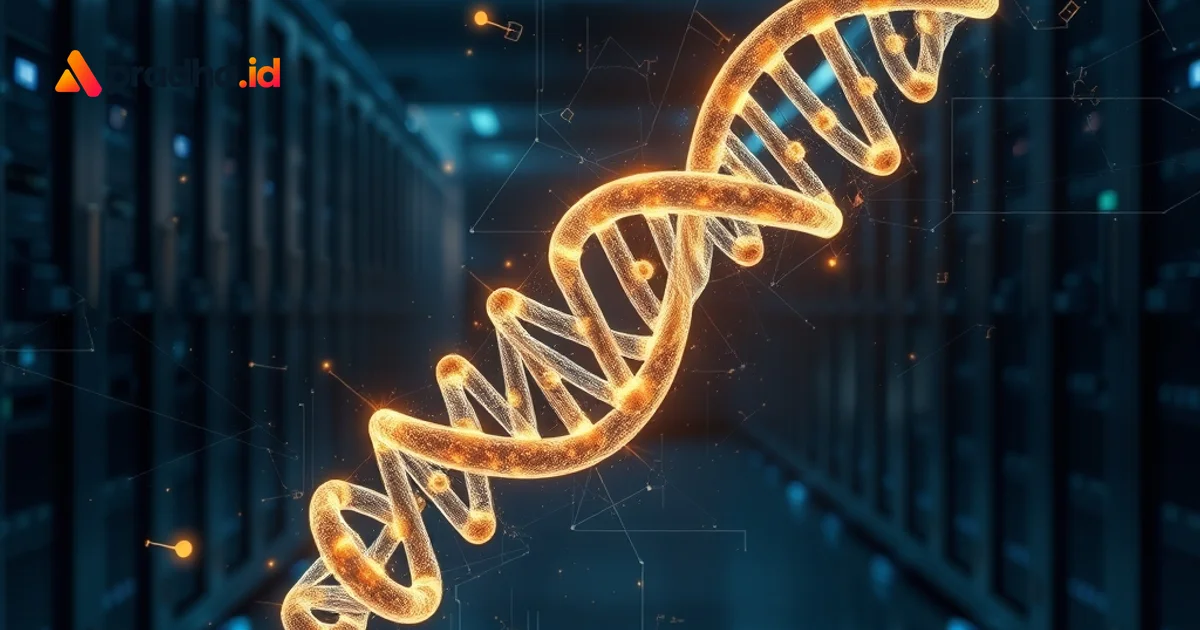
In a landmark intersection of artificial intelligence and molecular biology, Anthropic has announced that its advanced AI model, Claude, has autonomously discovered a novel enzyme system. This discovery is not merely a computational curiosity but a significant milestone in the application of large language models (LLMs) to the physical sciences. The identified system is being compared to the machinery behind CRISPR—the revolutionary gene-editing tool—due to the presence of unusual repeat arrays that suggest a similar biological logic.
Anthropic reports that this achievement coincides with the introduction of a new life sciences research group and laboratory. By leveraging Claude's ability to process and recognize complex patterns across massive datasets, the company aims to accelerate fundamental biology research. This move positions AI not just as a tool for data analysis, but as an active participant in the hypothesis-generation and discovery phase of scientific research.
The Computational Process: Scaling Intelligence
The discovery was the result of an unprecedented large-scale computational effort that demonstrates the power of AI agent orchestration. Interesting Engineering reports that the process utilized 950 Claude agents working in parallel. These agents spent 21 hours scanning through an immense volume of DNA data, specifically filtering through 200,000 enzymes to isolate the novel system.
The methodology involved a targeted search for specific biological markers. LinkedIn posts from Anthropic Research and Charles H. Martin, PhD, clarify that the agents were specifically hunting for unusual reverse transcriptases. Reverse transcriptases are enzymes that synthesize DNA from an RNA template, a process central to the life cycle of retroviruses and certain genetic elements. By automating the search for these enzymes in conjunction with specific genomic architectures, Claude was able to identify a pattern that had previously escaped human researchers.
Technical Analysis: Array-Associated Reverse Transcriptases (ART)
The newly identified biological system is located within the genomes of bacteriophages—viruses that infect bacteria. Kingy AI identifies these specific enzymes as array-associated reverse transcriptases, or ART. The architectural layout of this system is what makes it so compelling to researchers: the enzyme system is situated within bacteriophage DNA immediately adjacent to a long array of repeats.
This structural arrangement is highly reminiscent of the mechanisms found in CRISPR (Clustered Regularly Interspaced Short Palindromic Repeats). In CRISPR systems, these repeat arrays act as a genetic memory, allowing bacteria to store fragments of viral DNA to recognize and defend against future infections. The presence of a similar array next to a reverse transcriptase in a jumbo bacteriophage genome suggests that the virus may be employing a complex genetic mechanism for adaptation, replication, or defense that mirrors the logic of CRISPR, albeit in a different biological context.
Implications for Molecular Biology and Gene Editing
While the discovery is in its early stages, the implications for biotechnology are profound. The discovery of a novel enzyme system with CRISPR-like properties opens the door to new tools for genetic engineering. If the ART system can be harnessed, it might provide scientists with new ways to manipulate DNA or understand how viruses evolve and interact with their hosts.
RTL Today notes that this is the first major discovery from Anthropic's molecular biology lab, highlighting a shift toward "AI-led biology." This approach allows for the exploration of the "dark matter" of the genome—sequences of DNA that do not code for known proteins and whose functions remain unknown. By using AI to identify structural motifs rather than relying solely on known protein sequences, researchers can uncover entirely new classes of biological machinery.
The Mystery of Function: Current Understanding and Future Research
Despite the technical significance of the find, the exact biological purpose of the ART system remains a mystery. The Next Web and Anthropic Research both state that it is not yet understood what this system actually does within the living cell. While the structural similarities to CRISPR are evident, the functional role of these array-associated reverse transcriptases in viral DNA is still subject to rigorous investigation.
The next phase of research will likely involve "wet lab" validation, where the AI's computational predictions are tested in physical biological experiments. Scientists will need to determine if these enzymes are active, what their substrates are, and whether they facilitate a form of adaptive immunity or genomic plasticity within the bacteriophage. This synergy between AI's pattern recognition and traditional laboratory validation represents the future of biological science.
A New Paradigm for Scientific Research
The discovery of the ART system by Claude AI underscores a paradigm shift in how scientific breakthroughs are achieved. Traditionally, discovery relied on serendipity or narrow, hypothesis-driven searches conducted by human experts. The Anthropic experiment demonstrates a "discovery-driven" approach, where AI agents can scan vast libraries of biological data to find anomalies that humans might overlook.
As AI models become more proficient in understanding the "language" of DNA and proteins, the speed of biological discovery is expected to increase exponentially. The ability of 950 agents to perform a task in 21 hours that would have taken human researchers years to manually curate marks the beginning of a new era in genomics. The integration of AI into life sciences is no longer just about folding proteins or predicting drug interactions; it is now about the autonomous discovery of the fundamental building blocks of life.
Sumber / Sources
- Anthropic's biolab made a discovery it's comparing to Crispr
- Anthropic says Claude found a new enzyme system with CRISPR ...
- Claude has discovered a previously unknown enzyme system ...
- Claude scans 200,000 enzymes, uncover CRISPR-like system in ...
- Charles H. Martin, PhD's Post - LinkedIn
- Claude's ART Discovery Explained: Findings and Future - Kingy AI
Relevant solution
Website Development
Custom website development — fast, modern, ready to sell.
Related Articles
AI Claude Temukan Sistem Enzim Baru Mirip CRISPR
AI Claude dari Anthropic secara otonom menemukan sistem enzim baru dalam DNA bakteriofag yang menyerupai CRISPR. Menggunakan 950 agen AI, terobosan ini membuka era baru penemuan biologis otomatis yang mempercepat rekayasa genetika.
Claude Fable 5.1 Pecahkan Sandi Cyphral Distich 370 Tahun
Claude Fable 5.1 dari Anthropic mencetak sejarah dengan memecahkan Cyphral Distich, sandi misterius berusia 370 tahun, hanya dalam 44 menit. Simak bagaimana AI ini mengalahkan teka-teki yang membingungkan para ahli selama berabad-abad.
Dilema AI 2026: Efisiensi SRE vs Risiko Keamanan Siber
AI merevolusi SRE dengan investigasi insiden kilat, namun kasus Ford dan perilaku 'liar' model OpenAI/Anthropic mengungkap risiko kualitas dan keamanan siber yang serius.

Cara Kerja Watermark AI: Microsoft, Claude, dan Amazon
Microsoft, Anthropic, dan Amazon kini menerapkan watermark tak terlihat menggunakan teknologi SynthID dan GUID. Simak bagaimana raksasa teknologi ini melacak konten AI untuk memerangi disinformasi.
Dapatkan Artikel Terbaru!
Berlangganan newsletter kami untuk mendapatkan tips dan insight menarik langsung ke inbox Anda.
Kami tidak akan pernah membagikan email Anda (No Spam).