
G-Shaped Economy: Ed Yardeni on the Generational Wealth Gap

Key Takeaways
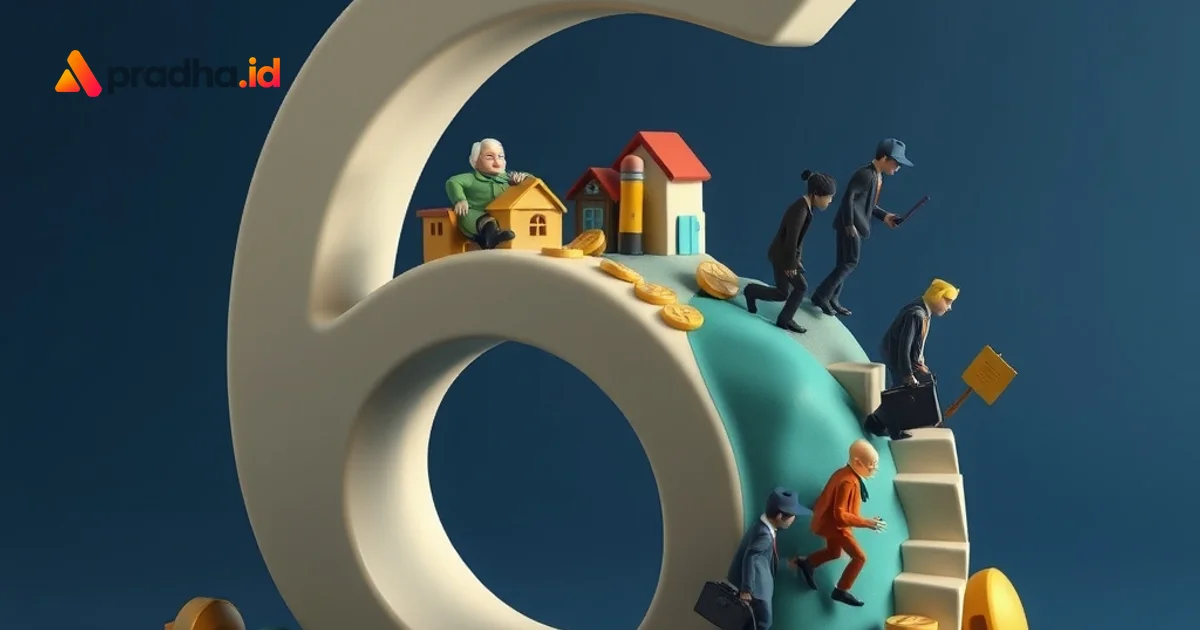
- Wall Street veteran Ed Yardeni proposes the "G-shaped economy," where "G" stands for generational.
- Baby Boomers currently hold nearly $90 trillion in net worth, creating a significant wealth divide between generations.
- The G-shaped model argues that economic disparities are driven more by generational asset ownership than by class-based income divisions.
For years, economists and financial analysts have relied on the term "K-shaped economy" to describe a society fractured by class. In a K-shaped scenario, one arm of the population thrives—often those with high-paying remote jobs or investment portfolios—while the other arm struggles with wage stagnation and inflation. However, Wall Street veteran Ed Yardeni argues that this class-based perspective is an incomplete lens. He suggests that focusing solely on income obscures a more systemic and profound trend: a divide defined not by what people earn, but by when they were born.
Yardeni has introduced the concept of the "G-shaped economy" to better illustrate the current state of U.S. consumer spending and wealth distribution. While the K-shape looks at the divergence of income levels, the G-shape looks at the divergence of generational net worth, highlighting a structural imbalance that fundamentally alters how the American economy functions.
The Generational Wealth Gap: Assets vs. Income
At the heart of the G-shaped economy is the unprecedented concentration of wealth held by the oldest living generation. Finance Biggo and Fortune report that Baby Boomers currently control nearly $90 trillion in net worth. This is not merely a statistic of success; it is a structural pillar of the modern U.S. economy. This massive accumulation of assets—primarily in the form of real estate and equities—has positioned older, asset-rich Americans as the primary driving force behind national economic stability and growth.
The critical distinction in Yardeni's thesis is the difference between income and assets. Mauldin Economics notes that standard economic models frequently miss the intergenerational wealth transfer because they prioritize the measurement of income. Monthly salary or hourly wages provide a snapshot of current cash flow, but they do not account for the compounding power of assets held over four decades. By focusing on assets, the G-shaped thesis reveals how wealth is concentrated in the hands of Boomers, creating a distinct economic trajectory for them that is virtually inaccessible to Millennials and Gen Z through labor alone.
The Mechanics of the 'G'
The "G" in G-shaped specifically stands for "generational." In this model, the economic experience of an individual is heavily dictated by their birth year and their subsequent ability to accumulate assets during specific market windows. For Baby Boomers, this involved entering the housing market and stock market at valuations that allowed for exponential growth. In contrast, younger generations are entering a market characterized by higher entry costs and different inflationary pressures, further widening the gap between those who own assets and those who must rent or save from a lower baseline.
Impact on Consumer Spending and Market Dynamics
The shift toward a G-shaped economy has profound implications for U.S. consumer spending trends. Because Baby Boomers hold such a vast portion of the nation's wealth, their spending habits significantly influence the broader economy. Business Insider reports that Yardeni has highlighted how Boomer spending is a key driver of economic activity. However, the nature of this spending is fundamentally different from that of younger cohorts.
While younger consumers may spend more on technology, experiences, and subscription services, Boomer spending is often tied to healthcare, luxury travel, and the maintenance of high-value assets. This creates a bifurcated market where businesses must cater to two entirely different financial realities: one group spending from a place of accumulated surplus (the Boomers) and another spending from a place of monthly income (Millennials and Gen Z).
Furthermore, this generational divide suggests that the "resilience" often cited in U.S. economic reports may be skewed. If the economy appears strong because asset-rich Boomers continue to spend despite inflation, it may mask the genuine financial distress of younger workers who do not have a $90 trillion safety net to lean on. This creates a deceptive economic narrative where the macro-indicators look positive, but the micro-experience for a significant portion of the population is one of increasing precariousness.
A New Economic Lens for Inequality
The transition to a G-shaped economy represents a paradigm shift in how analysts view economic inequality. Axios notes that while many older Americans are indeed asset-rich, the overall trend points toward a systemic generational divide that transcends traditional class boundaries. A high-earning Millennial professional may still be "poorer" in terms of net worth than a retired Boomer with a paid-off home and a diversified portfolio, despite the Millennial having a higher monthly income.
By recognizing the economy as "G-shaped," economists can better track the flow of wealth and the potential impact of the "Great Wealth Transfer." As Baby Boomers begin to pass their assets down to heirs, the G-shape may eventually evolve, but in the interim, it explains the current friction in the housing market and the volatility of consumer confidence. Yardeni Research continues to monitor this debate, contrasting the G-shaped and K-shaped models to determine which better predicts future market movements.
The Broader Financial Landscape
This generational divide is not happening in a vacuum. It coincides with other major shifts in the global order. While the G-shaped economy defines the internal U.S. struggle, Fortune India suggests that the global economic order is also undergoing a shake-up, with countries like India projected to become major economic powers by 2031. Within the U.S., the interaction between this generational wealth gap and new technologies, such as AI, could either bridge the gap or widen it. Ed Yardeni and Wedbush analyst Dan Ives have maintained an optimistic view of AI's potential, but the question remains: who will capture the wealth generated by AI—the asset-rich Boomers who own the stocks, or the younger generations who will operate the technology?
Ultimately, the G-shaped economy model forces us to look beyond the paycheck. It challenges the notion that hard work and high income are the sole drivers of financial security, pointing instead to the timing of asset accumulation. In a world where the divide is generational, the path to economic stability for the youth may require different policy interventions than those used to combat traditional class-based inequality.
Sumber / Sources
- We're living in the 'G-shaped economy'—where boomers control $90 ...
- The G-Shaped Economy | Mauldin Economics
- Baby Boomers Hold $90 Trillion in Wealth, Reshaping the U.S. ...
- Baby Boomers Are the Driving Force Behind US Economy: Ed Yardeni
- Gray matters - Axios
- Economists say we're in a G-shaped economy. What does that mean ...
Relevant solution
Website Development
Custom website development — fast, modern, ready to sell.
Related Articles

Apa Itu Ekonomi Berbentuk G? Peran Baby Boomer bagi Global
Pelajari konsep Ekonomi Berbentuk G, sebuah tesis yang mengungkap bagaimana kekayaan aset generasi Baby Boomer menjadi penopang utama konsumsi global dan penyelamat finansial bagi generasi muda.

Checklist Implementasi AI Document Processing Perusahaan
Jangan terjebak demo AI yang memukau! Pelajari checklist lengkap implementasi AI Document Processing, mulai dari evaluasi jenis dokumen, infrastruktur self-hosted, hingga perhitungan ROI yang akurat.

Visit Eden Prairie, MN: A Guide to Parks, Schools & Living
Discover Eden Prairie, Minnesota: a premier family-friendly city featuring 170+ miles of trails, top-rated schools, and the famous Eden Prairie Center.

Daisy Ridley: From Star Wars Stardom to Versatile Actress
From her breakout role as Rey in Star Wars to her recent work in films like Cleaner and Magpie, explore the professional journey and artistic evolution of British actress Daisy Ridley.
Dapatkan Artikel Terbaru!
Berlangganan newsletter kami untuk mendapatkan tips dan insight menarik langsung ke inbox Anda.
Kami tidak akan pernah membagikan email Anda (No Spam).