
Cloud in a Bottle: Simplifying Open-Source Self-Hosting

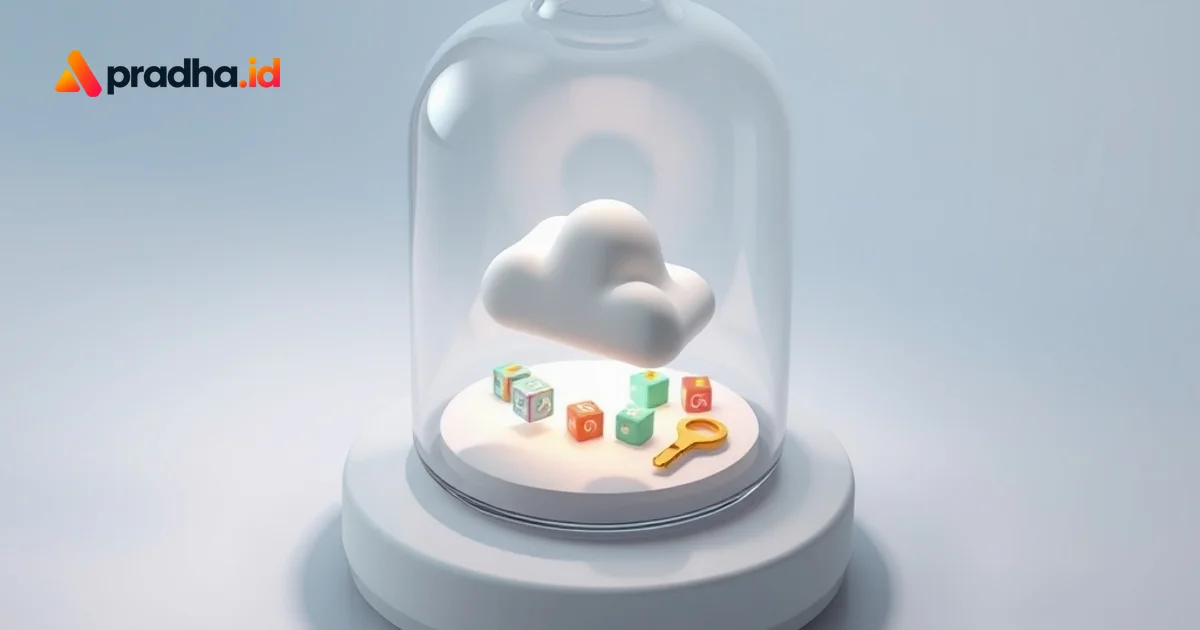
Key Takeaways
- Cloud in a Bottle is an open-source personal cloud project designed to make self-hosting accessible to everyone.
- The platform utilizes containerized apps, unified authentication, and a focus on good user experience (UX).
- The project aims to make the process of self-hosting feel as intuitive as using a smartphone.
A New Paradigm for Personal Cloud Management
The landscape of personal data management is undergoing a significant shift toward user-centric accessibility with the introduction of Cloud in a Bottle. For years, the concept of a "personal cloud" was reserved for the technically proficient—those comfortable with command-line interfaces, SSH keys, and the intricacies of Linux server administration. Cloud in a Bottle enters the market as an open-source personal cloud project specifically engineered to lower this barrier to entry for the average individual.
The core philosophy of the project is to decouple the power of self-hosting from the complexity of its implementation. Zeli.app notes that the project is designed to make the act of self-hosting feel as seamless and intuitive as using a smartphone. By abstracting the underlying infrastructure, Cloud in a Bottle allows users to reclaim ownership of their data without requiring a degree in systems administration, effectively bridging the gap between the convenience of Big Tech clouds and the privacy of local hosting.
Technical Foundations: The Engine of Accessibility
To transform a complex technical task into a user-friendly experience, Cloud in a Bottle relies on several critical technical pillars. The Cloud in a Bottle blog explains that the system utilizes containerized apps and unified authentication to simplify the management of various services. Containerization—likely leveraging technologies similar to Docker—allows users to deploy applications in isolated environments, ensuring that installing one service does not break another and making updates a matter of a few clicks rather than manual configuration files.
Unified authentication is another cornerstone of the project. In traditional self-hosting, users often have to manage separate login credentials for every single service they host (e.g., a separate login for a file manager, a calendar, and a photo gallery). By implementing a unified auth system, Cloud in a Bottle provides a Single Sign-On (SSO) experience, mirroring the convenience of a Google or Apple ecosystem but hosted entirely on the user's own hardware.
Beyond the backend, the project places a heavy emphasis on "good UX." The Cloud in a Bottle blog emphasizes that the technical complexities of server management are intentionally hidden behind an intuitive interface. This design choice ensures that the user interacts with a polished dashboard rather than a terminal, reducing the "fear factor" associated with managing one's own server.
The Broader Context of Self-Hosting and Edge Computing
The emergence of Cloud in a Bottle aligns with a broader industry trend toward edge computing and decentralized data. While Cloud in a Bottle focuses on the general consumer, other research highlights the push toward miniaturized infrastructure. For instance, arXiv discusses Pico-Cloud, which explores cloud infrastructure for tiny edge devices using ClusterHAT and Raspberry Pi Zero boards to create compact deployments. This indicates a growing appetite for "local-first" computing where data is processed and stored as close to the user as possible.
Furthermore, the struggle for a balanced developer experience is a common theme in modern software. GrowthBook's Modern Product Development Blog highlights the ongoing tension between self-hosting and managed cloud options, noting that while developers value the control of self-hosting, they often seek a strong developer experience that eases the transition if they eventually outgrow their local setup. Cloud in a Bottle attempts to solve this by providing the "best of both worlds": the control of self-hosting with the polished experience of a managed service.
Community Reception and the Friction of Growth
Despite its ambitious goals, the journey of Cloud in a Bottle has not been without controversy. The project's mission to make self-hosting accessible to everyone is echoed across platforms like Reddit and its official blog, where it is framed as a comprehensive solution for those seeking a personal cloud without a steep learning curve. However, the developer community—often the most critical of new open-source tools—has expressed skepticism.
On Hacker News, the project has encountered friction. Some users have raised concerns regarding the project's promotional tactics, alleging that the team has been "spamming issues in repos" to promote the project without disclosing their direct association with it. This has led to a divide between users who appreciate the accessibility the tool provides and developers who value transparency and traditional open-source etiquette.
Additionally, some professional perspectives on Hacker News suggest that the claim of making self-hosting "easy for everyone" may be an oversimplification. Critics argue that regardless of the UI, the underlying realities of hardware failure, network security, and data backups still require a level of technical oversight that a simple interface cannot entirely eliminate.
The Future of Democratized Data
Despite the community debates, the core value proposition of Cloud in a Bottle remains potent: the democratization of self-hosting. By transforming a traditionally complex technical task into a user-friendly experience, the project challenges the monopoly of centralized cloud providers. It posits a future where the average person can run a suite of containerized apps—from private document storage to home automation—without needing to master the intricacies of the Linux kernel.
As AI continues to evolve and the demand for private, locally-processed data increases, tools like Cloud in a Bottle may become essential. The ability to host one's own environment ensures that personal data remains private and secure, providing a necessary counterweight to the pervasive data collection of the modern web. By focusing on the intersection of containerization, unified authentication, and superior UX, Cloud in a Bottle is attempting to turn the "bottle" of self-hosting into a scalable, accessible reality for the general public.
Sumber / Sources
Relevant solution
Website Development
Custom website development — fast, modern, ready to sell.
Related Articles

Cloud in a Bottle: Solusi Mudah Self-Hosting Open-Source
Cloud in a Bottle mendemokratisasi self-hosting melalui solusi personal cloud open-source. Dengan fitur containerized apps dan UX intuitif, pengelolaan server kini semudah menggunakan smartphone.

Cloudflare Saves 100TB RAM with Rust DNS Cache Optimization
Cloudflare's Big Pineapple platform reclaimed 100TB of memory by slashing DNS cache footprints by 56% using five Rust-level optimizations. Discover how byte-level efficiency scales to save 130 servers' worth of RAM.

AI Sales Assistant WhatsApp: Ubah Chat Jadi Transaksi
Ubah chat WhatsApp yang pasif menjadi mesin transaksi real-time. Pelajari bagaimana AI Sales Assistant dan WhatsApp Business API dapat mengotomatisasi stok, rekomendasi, hingga pembayaran.

Otomasi Invoice & Kuitansi dengan AI Document Processing
Ubah proses input invoice manual yang memakan waktu berhari-hari menjadi hitungan jam. Pelajari bagaimana AI Document Processing mengeliminasi human error dan meningkatkan akurasi laporan keuangan.
Dapatkan Artikel Terbaru!
Berlangganan newsletter kami untuk mendapatkan tips dan insight menarik langsung ke inbox Anda.
Kami tidak akan pernah membagikan email Anda (No Spam).