
DeepSeek-V4.1-Flash: Native Multimodal MoE AI Explained

Key Takeaways
- DeepSeek-V4.1-Flash is the smallest model in a new architecture family, designed to be smarter, faster, and more efficient.
- The model utilizes a Mixture-of-Experts (MoE) architecture, with technical specifications including 522B total parameters.
- It features comprehensive improvements in text and Agent performance, supporting a 1M context window and native vision-language capabilities.
Introducing DeepSeek-V4.1-Flash: A Paradigm Shift in AI Efficiency
DeepSeek has officially released DeepSeek-V4.1-Flash, positioning it as the most agile and efficient model within its latest architecture family. Marketed as "smarter, faster, and more efficient," this release is not merely an incremental update but a strategic move toward native multimodality. While previous iterations like V4 Flash Vision-Exp relied on a "plug-in" approach to handle visual data, 36kr reports that V4.1 Flash is DeepSeek's first truly native multimodal model, allowing for deeper integration between visual and textual understanding.
The emergence of DeepSeek-V4.1-Flash comes at a time when the industry is shifting toward "sparse" models—systems that possess massive knowledge bases but only activate the necessary "neurons" for a specific task. This approach allows the model to maintain the intelligence of a trillion-parameter system while operating with the latency of a much smaller model. Spark-News notes that this update introduces an altered architecture specifically designed for native multimodal operations, supported rapidly by ecosystem tooling.
Technical Architecture: The Power of Sparse MoE
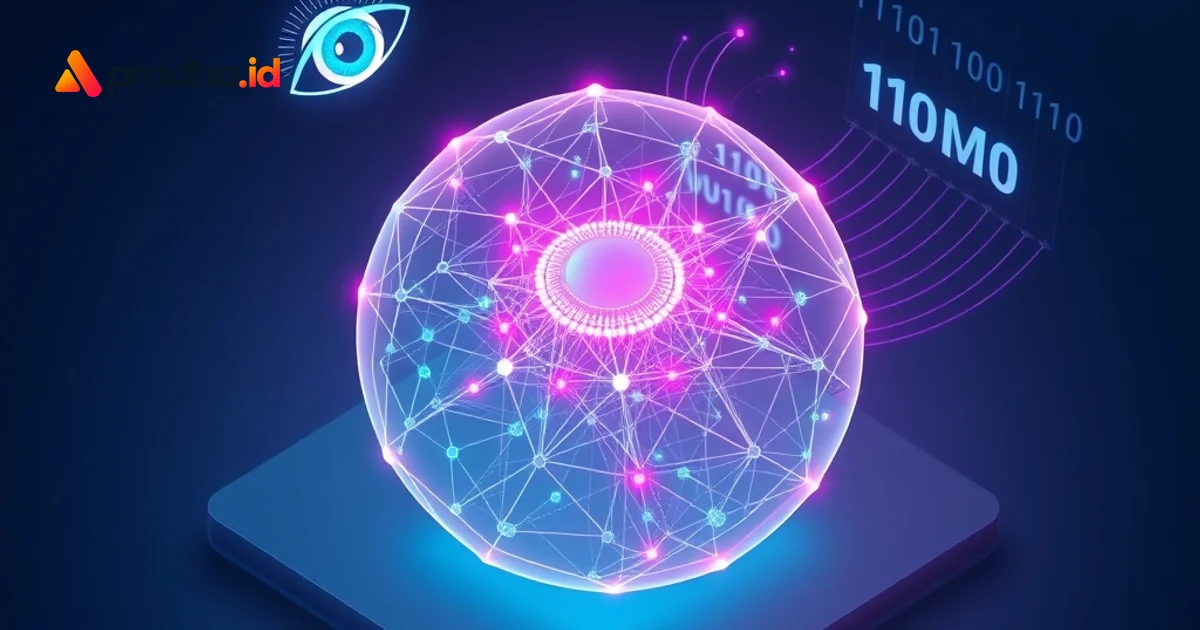
At the core of DeepSeek-V4.1-Flash is a sophisticated vision-language Mixture-of-Experts (MoE) framework. This architecture is designed to solve the classic trade-off between model capacity and computational cost. vLLM Recipes notes that the model features a staggering 522 billion total parameters. However, the genius of the MoE design lies in its activation strategy: only 8 billion parameters are active per prompt token, and 16 billion parameters are active per output token.
This sparse activation means that for any given request, the model only utilizes a small fraction of its total brainpower, which Buzzgrewal describes as keeping roughly 97% of the model's "brain" asleep. The architecture consists of 40 transformer layers, where every block wraps a hybrid-attention sublayer and a sparse MoE sublayer inside mHC residual connections. This structure allows the model to handle highly complex tasks without the prohibitive hardware requirements typically associated with half-trillion parameter models.
Further expanding on this efficiency, OpenRouter describes V4.1 Flash as the cost-efficient tier of the V4.1 family, reporting that it exceeds the performance of previous V4 iterations while maintaining a lightweight footprint. This balance of scale and sparsity is what enables the model to provide frontier-level intelligence without the typical cloud computing overhead.
Revolutionizing Vision Processing and KV Cache
One of the most significant technical breakthroughs in the V4 series is the optimization of visual data processing. MindStudio highlights a dramatic efficiency gain in how the model handles images. While competitors like Claude's vision models may require up to 870 KV cache entries to process an image, DeepSeek V4's vision model processes images using roughly 90 KV cache entries. This represents nearly a 10x reduction in memory overhead, making multimodal workflows significantly cheaper and faster to execute.
This "Optical Compression" allows the model to ingest visual information with unprecedented speed. By reducing the memory footprint of the Key-Value (KV) cache, DeepSeek enables higher throughput and lower latency for image-to-text tasks. This is critical for real-time applications where the model must analyze a visual stream or a large set of images without hitting memory bottlenecks.
Furthermore, the model supports a massive context window of 1 million tokens, as listed by OpenCode Data. This capability allows developers to feed entire codebases, long legal documents, or extensive technical manuals into the prompt, ensuring the model has full situational awareness before generating a response. Arxiv reports that the DeepSeek-V4-Pro-Max variant also delivers strong results on synthetic and real use cases with this 1-million-token window, surpassing several industry benchmarks.
Performance, Capabilities, and Agentic Autonomy
The DeepSeek Platform emphasizes that the official release of DeepSeek-V4.1-Flash brings comprehensive improvements to both general text generation and Agent performance. The model is specifically tuned for "agentic" behavior—the ability to plan, use tools, and execute multi-step reasoning tasks autonomously.
DeepSeek API Docs reports that the V4 preview is open-source SOTA (State-of-the-Art) in Agentic Coding benchmarks, demonstrating a superior ability to write, debug, and optimize code compared to other open models. This is further evidenced by practical demonstrations where the model has successfully solved complex physics problems, identified critical bugs in Air Traffic Control (ATC) software, and built a fully functional 3D viewer from scratch.
In terms of competitive benchmarking, the NVIDIA Developer Forums suggest that DeepSeek Flash 4.1 matches the performance of GLM 5.3 flash. This parity confirms that DeepSeek's architecture is among the most efficient in the current AI landscape, providing frontier-level intelligence at a fraction of the operational cost. Additionally, Microsoft Foundry highlights the V4 series as containing strong MoE language models, including the Pro version with 1.6 trillion parameters, placing the Flash version within a highly capable family of models.
Developer Integration and Ecosystem Accessibility
To ensure rapid adoption, DeepSeek has made the model highly accessible through various integration gateways. For developers utilizing the Vercel AI Gateway, the DeepSeek V4.1 Flash Beta can be called using the AI SDK's generateText and streamText functions. Additionally, it maintains compatibility with OpenAI Responses and OpenAI Chat Completions, allowing teams to swap their existing LLM providers for DeepSeek with minimal code changes.
For those looking to implement the model at a deeper level, Hugging Face provides essential resources, including a prompt encoding reference and a minimal PyTorch inference implementation. This implementation specifically covers the vision encoder, enabling researchers to study how the model translates visual pixels into semantic tokens. Morph further notes that the V4 Flash variant is MIT-licensed, promoting a more open approach to high-performance AI development.
The Broader Impact on the AI Landscape
The release of the V4 series, including the Pro and Flash versions, signals a new era of efficient multimodality. Outcome School notes that the V4 family is designed to be natively multimodal from the ground up, rather than adding vision as an afterthought. This native approach allows the model to reason across different modalities (text, image, and code) more fluidly, avoiding the "translation loss" that often occurs when separate vision and language models are bridged together.
Moreover, the release cycle of the V4 series shows DeepSeek's commitment to iterative improvement. OrcaRouter mentions that the "0813" build of the Pro version was a post-training upgrade to the existing architecture, proving that the underlying MoE framework is flexible enough to be enhanced through fine-tuning without requiring a complete, costly pre-training phase from scratch. Skywork describes this shift as a seismic change in the landscape, particularly as models approach the trillion-parameter scale while remaining computationally viable.
As AI moves toward more autonomous agents, the combination of a 1M context window, native vision, and sparse MoE efficiency positions DeepSeek-V4.1-Flash as a critical tool for enterprises. By automating complex, visually-dependent workflows without incurring massive cloud computing costs, DeepSeek is lowering the barrier to entry for high-end multimodal AI integration.
Relevant solution
Website Development
Custom website development — fast, modern, ready to sell.
Related Articles

DeepSeek-V4.1-Flash: Model AI Multimodal Cepat & Murah
DeepSeek V4.1-Flash merevolusi efisiensi AI dengan arsitektur MoE, konteks 1M token, dan harga API terendah. Pelajari bagaimana model multimodal ini menantang GPT-5 dan Gemini 3.0 Pro.

Tencent Hy4 Preview: 770B Open-Source MoE Model Explained
Tencent disrupts the AI landscape with Hy4 preview, a 770B-parameter MoE model. Featuring 49B active parameters and a 1M-token context window, it outperforms rivals in coding and research.
Optimasi Redis di Next.js untuk Ribuan Concurrent Users
Tingkatkan performa Next.js dalam menangani ribuan concurrent users dengan Redis. Pelajari implementasi Cache-Aside Pattern dan optimasi IORedis untuk mengurangi beban database secara drastis.

Update Rekrutmen CPNS 2026: Jadwal SKD & Formasi Kedinasan
Simak jadwal lengkap SKD CAT CPNS 2026, rincian 4.770 formasi Sekolah Kedinasan, serta persyaratan administrasi instansi strategis untuk persiapan seleksi ASN.
Dapatkan Artikel Terbaru!
Berlangganan newsletter kami untuk mendapatkan tips dan insight menarik langsung ke inbox Anda.
Kami tidak akan pernah membagikan email Anda (No Spam).