
Golden State Valkyries: WNBA Team Guide & Norse Origins

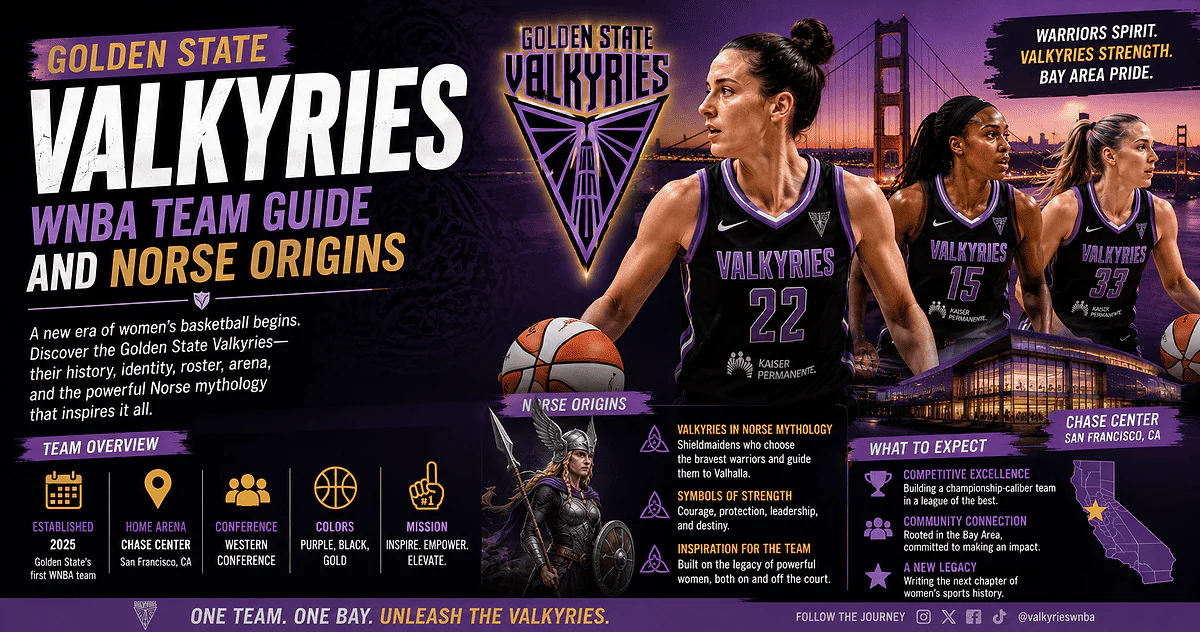
The Golden State Valkyries: From Norse Mythology to the WNBA
The arrival of the Golden State Valkyries marks a transformative moment for professional women's basketball in the Bay Area. More than just an expansion team, the Valkyries represent a fusion of ancient mythology, modern female empowerment, and the high-stakes world of the Women's National Basketball Association (WNBA). By blending a fierce brand identity with a strategic approach to team building, the organization is carving out a unique space in the sporting landscape of San Francisco and beyond.
The Mythological Foundation: Who are the Valkyries?
To understand the identity of the Golden State Valkyries, one must first look toward the frost-covered landscapes of ancient Scandinavia. The term 'Valkyrie' is deeply rooted in Norse mythology. According to historical records and legendary sagas, Valkyries are powerful female beings and goddesses who served as the choosers of the slain. They were tasked by Odin, the Allfather, with deciding which warriors would live or die during the heat of battle, subsequently escorting the bravest souls to Valhalla, the great hall of the slain.
These figures remain some of the most recognizable symbols of Norse culture, embodying strength, independence, and divine authority. In the context of the WNBA, this mythology serves as a metaphor for the athletes' own battles on the court—their resilience, their competitive spirit, and their pursuit of greatness. The team's branding leverages this imagery, utilizing symbols like the sword and the architectural lines of the Bay Bridge to bridge the gap between ancient warrior spirits and the modern urban environment of the Golden State.
Modern Interpretations and Pop Culture
Beyond the dusty pages of mythology, the concept of Valkyries has transitioned seamlessly into modern media, ensuring the archetype remains relevant to younger generations. For instance, in the popular Record of Ragnarok series, the Valkyries are reimagined as strategic allies. The twelfth Valkyrie sister, Skeggjöld, is depicted performing Völundr—a divine union—with Sakata Kintoki during the twelfth round of combat, highlighting the theme of partnership and amplified power.
This cultural ubiquity helps the Golden State Valkyries appeal to a broad demographic, from history buffs and anime fans to sports enthusiasts. By aligning themselves with a figure that represents "female power," the team is not just selling tickets; they are selling an identity of strength and fearlessness.
The Rise of the Golden State Valkyries in the WNBA
In the realm of professional sports, this powerful name has been adopted by the Golden State Valkyries. Owned by Joe Lacob—who also owns the NBA's Golden State Warriors—the franchise was officially introduced as an expansion team to bring top-tier women's basketball to the Bay Area. The launch was designed to be an "unmatched" experience, focusing on creating a home-court advantage that feels more like a fortress than a stadium.
Central to this identity is the concept of "Ballhalla," the nickname for the team's home environment. Ballhalla is envisioned as a place of celebration and intensity, where the energy of the crowd mirrors the legendary feasts of Norse mythology. The team's visual identity is anchored by the striking "Valkyrie Violet," a color that symbolizes both royalty and the mysterious twilight of the North, ensuring the team stands out in a league filled with traditional primary colors.
Introducing Violet: The Spirit of the Team
No professional sports team is complete without a mascot that embodies its spirit. The Golden State Valkyries introduced "Violet," a raven, to serve as the team's official companion. The choice of a raven is not accidental; in Norse lore, ravens are known as the savvy and helpful counterparts to the Valkyries. Ravens are viewed as smart, clever, and playful creatures that flock together, mirroring the teamwork and intelligence required to succeed in the WNBA.
The introduction of Violet was a masterclass in marketing. The team built anticipation through a mysterious "violet egg" that appeared in Thrive City on August 7, creating a viral buzz before the mascot was officially unveiled during a halftime show against the Connecticut Sun. This narrative-driven approach to branding has helped the Valkyries build a deep emotional connection with their fans before they even played their first official game.
2026 Season Highlights and Competitive Journey
The Golden State Valkyries' 2026 regular season, presented by Kaiser Permanente, has been a whirlwind of growth and competitive struggle. The campaign began with a challenging road game in Seattle on May 8, testing the team's resolve away from their home crowd. However, the energy shifted dramatically during their home opener on May 10, where they faced the Phoenix Mercury at the Chase Center. The 5:30 p.m. tip-off saw a packed house, signaling the Bay Area's hunger for WNBA action.
Throughout the 2026 campaign, the Valkyries have experienced the volatility typical of an expansion team finding its footing. A standout moment occurred on July 15, 2026, when the Valkyries secured a decisive victory against the Indiana Fever with a final score of 88-75. This game served as a proof-of-concept for their offensive strategies and defensive cohesion.
Individual brilliance has also played a key role in the team's visibility. Gabby Williams, a versatile and dynamic force on the court, captured national attention by scoring 18 points during the 2026 All-Star Game, proving that the Valkyries possess the elite talent necessary to compete with the league's established powerhouses.
Roster Strategy: The "Win-Now" Philosophy
Building an expansion team requires a delicate balance between developing young talent and acquiring seasoned veterans. The Golden State Valkyries' front office has made the strategic decision to prioritize a "win-now" direction. Rather than enduring a long rebuilding phase, the organization has focused on protecting veteran players who can provide immediate leadership and stability.
This aggressive strategy, however, comes with trade-offs. The decision to protect veterans resulted in the loss of promising young guard Carla Leite, who moved to the Portland Fire via the WNBA expansion draft. While the loss of a young prospect like Leite is a blow to the long-term depth of the roster, it underscores the team's commitment to immediate competitiveness and veteran presence.
Other notable player narratives include Zandalasini, who demonstrated flashes of brilliance by achieving the highest-scoring quarter of her career, despite the team suffering a loss in that particular game. Such individual milestones are critical for building confidence within a new franchise.
The Future of the Valkyries in the Bay Area
As the Golden State Valkyries continue to evolve, their impact extends beyond the scoreboard. By positioning themselves as a symbol of female power in a city known for its innovation and bridges, they are inspiring a new generation of athletes. The integration of Norse mythology, the clever use of the raven mascot Violet, and a bold "win-now" roster strategy suggest that the Valkyries are not content with simply participating in the WNBA—they intend to dominate it.
Whether it is through the roar of the crowd in Ballhalla or the strategic maneuvers of their front office, the Golden State Valkyries are rewriting the expansion playbook. As they move forward from their 2026 season, the world will be watching to see if these modern-day warrior women can turn their mythological inspiration into a championship reality.
Sumber / Sources
- Valkyrie - Wikipedia bahasa Indonesia, ensiklopedia bebas
- Valkyries Announce 2026 Regular Season Schedule Presented by Kaiser ...
- What is the Valkyrie symbol? Meaning, origins and myths explained
- Valkyries 88-75 Fever (Jul 15, 2026) Final Score - ESPN
- Valkyries news: Promising young guard lost to Portland in WNBA ...
- The Official Website of the Golden State Valkyries | WNBA
Relevant solution
Website Development
Custom website development — fast, modern, ready to sell.
Related Articles
Gabby Williams: Career, Stats, and Impact on the WNBA
Explore the comprehensive career of Gabby Williams, from her UConn championships and WNBA All-Star status with the Golden State Valkyries to her dominance in the EuroLeague.

Texas Rangers 2026 Guide: Highlights, Theme Nights & News
Explore the Texas Rangers' 2026 season, featuring Jacob deGrom's pitching dominance and a historic promotional calendar. From Negro League tributes to the state-of-the-art Globe Life Field, discover how the Rangers are blending victory with community.

GPT-6 Astra OpenAI: Revolusi AI untuk Sektor Hukum & Riset
OpenAI meluncurkan GPT-6 Astra, model AI tercepat dan tercerdas untuk sektor hukum. Temukan bagaimana teknologi ini merevolusi riset legal dan analisis dokumen finansial.
Okultasi Venus oleh Bulan 14 September 2026 di Indonesia
Saksikan kemegahan Okultasi Venus oleh Bulan yang menghiasi langit Indonesia pada 14 September 2026. Pelajari mengapa planet Venus menghilang sementara dan wilayah mana saja yang menjadi titik pengamatan terbaik.
Dapatkan Artikel Terbaru!
Berlangganan newsletter kami untuk mendapatkan tips dan insight menarik langsung ke inbox Anda.
Kami tidak akan pernah membagikan email Anda (No Spam).