
Jason Arday Resigns from Cambridge Amid Plagiarism Row

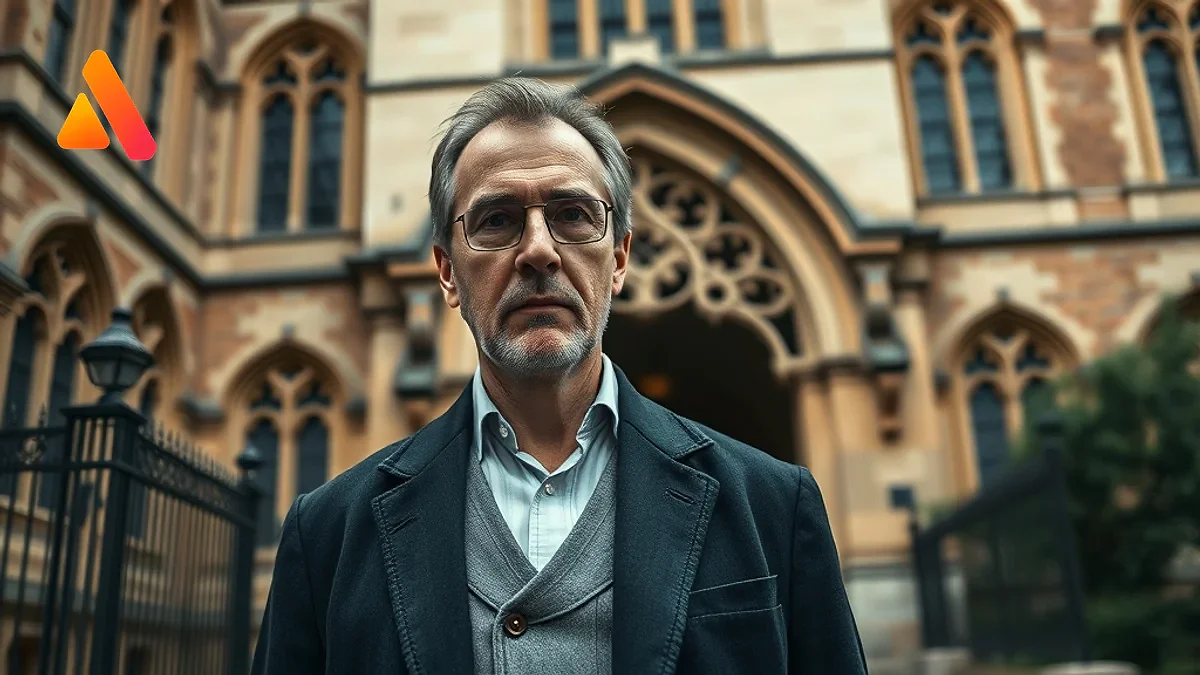
The Fall of a Rising Star: Professor Jason Arday Resigns from University of Cambridge
In a sudden and high-profile shake-up within the halls of Britain's most prestigious academic institution, Professor Jason Arday has resigned from his position at the University of Cambridge with "immediate effect." The resignation marks a dramatic turn for a man who was once hailed as a trailblazer for diversity in higher education, now finding himself at the center of a storm involving allegations of academic dishonesty, plagiarism, and the embellishment of his professional credentials.
The Catalyst for Resignation
The departure of Professor Arday was not a voluntary career move but the result of escalating pressure and a formal institutional response. The University of Cambridge announced that Arday was to face a rigorous investigation after the institution received "new information" regarding his qualifications and previous academic work. This probe was specifically designed to address claims that Arday had engaged in plagiarism and the fabrication of his career achievements.
The timing of the resignation was particularly abrupt. Hours after the university confirmed the launch of its investigation, Arday published an open letter via the Good Law Project. In this communication, he stated that he had "concluded that the only way to bring this chapter to an end was to step down." This move effectively preempted the university's formal findings, though it did little to quiet the growing chorus of critics online and within the academic community.
"I am accountable for the mistakes I've made," Arday previously admitted, attempting to frame the controversy as a series of errors rather than a deliberate attempt to deceive.
Who is Jason Arday? A Profile in Contrast
To understand the weight of this scandal, one must look at the profile Jason Arday built for himself. Born in 1985, Arday rose rapidly through the academic ranks to become the Professor of Sociology of Education at the University of Cambridge. He achieved a historic milestone by becoming the youngest-ever Black professor in the history of the institution, a feat that brought him significant national and international attention.
Beyond his title, Arday was a Fellow of the Royal Society of Arts (FRSA) and a prominent public intellectual. He frequently spoke at conferences and in the media about the intersections of race, neurodiversity, and academia. He often shared how his identity as a Black autistic man shaped his lived experience, using his platform to advocate for systemic changes in how universities support marginalized students and staff. This role as a champion for equity made the subsequent allegations of intellectual dishonesty even more polarizing.
The Nature of the Allegations: Plagiarism and Fabrication
The controversy began to gain traction when independent researchers and academics started scrutinizing Arday's body of work. The allegations are not limited to a single instance of oversight but suggest a systemic pattern of academic misconduct. Specifically, reports indicate that his doctoral dissertation was "riddled with plagiarism," with large sections of text allegedly lifted from other sources without proper attribution.
The investigation expanded beyond his thesis to include his subsequent scholarly articles and honorary appointments. Critics argue that Arday did not just borrow ideas but actively embellished his academic record to accelerate his ascent within the university hierarchy. The claims suggest a discrepancy between the "esteemed career" he presented to the public and the actual evidence of his scholarly contributions.
Further reports have highlighted irregularities in his professional history, with some sources suggesting that his claims regarding his career trajectory were fabricated or exaggerated to fit the narrative of a "prodigy" academic. This has led to a wider debate about the pressures of high-stakes academia and the potential for "star culture" to overlook rigorous vetting processes.
The Broader Impact on Academia and DEI
The Jason Arday case has sparked a fierce debate that extends beyond simple plagiarism. Because Arday was a prominent figure in Diversity, Equity, and Inclusion (DEI) efforts, the scandal has been weaponized by different ideological factions. Some argue that the scrutiny of Arday was a targeted attack on a Black academic, while others contend that the failure to vet his credentials earlier was a result of "identity politics" overriding academic meritocracy.
The fallout has left the University of Cambridge in a difficult position. The institution must balance its commitment to diversity with its mandate to maintain the highest standards of academic integrity. The fact that such significant irregularities were not caught until after Arday had reached a professorship raises questions about the university's internal auditing and the peer-review process for high-profile appointments.
The Aftermath and Future Implications
As Jason Arday exits the University of Cambridge, the academic world is left to contemplate the consequences of his departure. For the students and colleagues who looked up to him as a symbol of progress, the news is a significant blow. For the wider academic community, it serves as a cautionary tale about the dangers of academic fraud and the necessity of transparency.
While Arday maintains that he is not a "liar" and that his work contained "errors," the scale of the plagiarism allegations makes a return to high-level academia unlikely. The case underscores a growing trend of "digital sleuthing" where academics use software and social media to crowdsource the verification of credentials, bypassing traditional institutional trust.
Ultimately, the resignation of Professor Jason Arday is more than just a personnel change; it is a reflection of the tension between the rapid pursuit of representation and the timeless requirement for academic rigor. As the University of Cambridge concludes its internal review, the incident will likely lead to stricter verification protocols for all future appointments, regardless of the candidate's profile.
Sumber / Sources
- Jason Arday: Cambridge professor in plagiarism row quits - BBC
- Cambridge professor Jason Arday resigns amid accusations of ...
- Cambridge announces investigation into professor accused of ...
- Cambridge professor at centre of plagiarism row defends his work
- Cambridge professor Jason Arday accused of plagiarism in ...
- Jason Arday - Wikipedia
Relevant solution
Website Development
Custom website development — fast, modern, ready to sell.
Related Articles

Texas Rangers 2026 Guide: Highlights, Theme Nights & News
Explore the Texas Rangers' 2026 season, featuring Jacob deGrom's pitching dominance and a historic promotional calendar. From Negro League tributes to the state-of-the-art Globe Life Field, discover how the Rangers are blending victory with community.

Duop Reath: From Portland Sniper to NBA Free Agency
From a two-way contract in Portland to becoming a prime target for the New York Knicks, Duop Reath's NBA journey is a masterclass in resilience. Discover how the South Sudanese-Australian sniper overcame a season-ending injury to remain one of the league's most coveted stretch-fives.

Shaquille O'Neal: From NBA Legend to Business Magnate
From shattering backboards as 'The Diesel' to building a massive business empire, discover how Shaquille O'Neal evolved from an NBA legend into a successful entrepreneur and Ed.D.

Kualitas Udara Kota Padang Berbahaya: Analisis AQI & PM2.5
Kualitas udara Kota Padang sempat mencapai level berbahaya dengan AQI 427 dan PM2.5 melonjak 105,7 kali standar WHO. Simak analisis fluktuasi polusi dan dampaknya bagi kesehatan warga.
Dapatkan Artikel Terbaru!
Berlangganan newsletter kami untuk mendapatkan tips dan insight menarik langsung ke inbox Anda.
Kami tidak akan pernah membagikan email Anda (No Spam).