
Pensión Mujeres Bienestar: Guide to Mexico's New Women's Pension

Key Takeaways
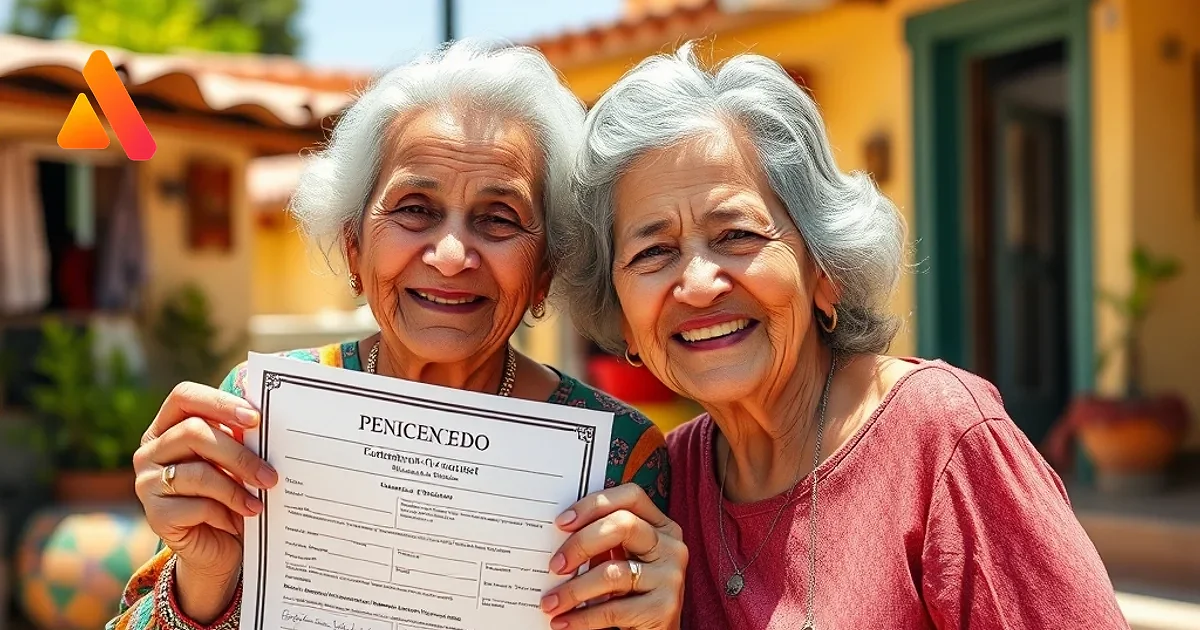
- The Pensión Mujeres Bienestar is a public policy created by President Claudia Sheinbaum for women aged 60 to 64.
- The program recognizes decades of unpaid care work and the contributions of women to society.
- Over 1.3 million women have already received their cards for the bimonthly pension.
- The benefit is framed as a legal right rather than a handout, delivered directly to beneficiaries without intermediaries.
A Recognition of Unpaid Labor and Social Justice
The Pensión Mujeres Bienestar has emerged as a flagship program of the current Mexican government, representing a paradigm shift in how the state views social welfare and gender equity. Launched under the administration of President Claudia Sheinbaum Pardo, the initiative is designed specifically for women between the ages of 60 and 64. For decades, the economic contributions of women—particularly those engaged in domestic labor, childcare, and elderly care—have remained invisible in national GDP calculations and excluded from traditional retirement systems.
Rather than being viewed as a simple subsidy or a charitable handout, the program is framed as a public policy of social justice. It recognizes the trajectory, effort, and lifelong contribution of millions of women who spent their prime working years ensuring the well-being of their families without receiving a salary or contributing to a formal pension fund. By institutionalizing this support, the Mexican government is effectively acknowledging that unpaid care work is a cornerstone of the economy and deserves legal and financial recognition.
Program Structure and Financial Benefits
The Pensión Mujeres Bienestar is structured as a bimonthly cash transfer. While initial figures varied during the rollout, recent updates indicate that the support amount has reached 3,100 Mexican Pesos (MXN) every two months. While some critics argue that this amount is modest, for many women in rural or marginalized urban areas, this guaranteed income provides a critical layer of financial autonomy, allowing them to cover basic needs, healthcare, or small investments in their own well-being.
One of the most strategic elements of the program is its role as a "bridge." In Mexico, all adults—regardless of gender—become eligible for the universal pension for older adults upon reaching the age of 65. By introducing the Pensión Mujeres Bienestar for the 60-64 age bracket, the government closes a five-year gap where women were previously without support, ensuring a seamless transition into the broader social safety net. This "automatic pass" ensures that women do not experience a dip in financial security as they age.
Implementation, Distribution, and the Fight Against Corruption
The rollout of the program has been extensive, spanning across various regions of Mexico, from the bustling City of Mexico to remote municipalities in Zacatecas. To facilitate the distribution of funds, the government has implemented a system of specialized bank cards. This move is not merely logistical; it is a political statement against corruption.
A key pillar of the distribution process is the elimination of third parties. In the past, social programs in Mexico were often plagued by "intermediaries" or political brokers who would demand favors or a percentage of the funds in exchange for facilitating access to benefits. President Claudia Sheinbaum has emphasized, particularly during events in Río Grande, Zacatecas, that cards are delivered directly to the beneficiaries. By removing the middleman, the administration ensures that 100% of the funds reach the intended recipient, maintaining the integrity of the delivery process and upholding the dignity of the women involved.
According to official reports, the program's reach has expanded rapidly. While early reports cited 1.3 million recipients, more recent data suggests that the program has already reached over 3 million Mexican women, reflecting the high demand and the efficiency of the registration drives.
Eligibility and the Registration Process
To ensure that the program reaches those who truly need it, the government has established clear eligibility criteria and a streamlined registration process. The primary requirement is that the applicant must be a woman residing in Mexico between the ages of 60 and 64.
The registration process is designed to be accessible, even for those with limited digital literacy. The government provides informational infographics and local registration centers to guide women through the necessary steps. Required documentation typically includes:
- Birth Certificate (Acta de Nacimiento): Original and copy to verify age and identity.
- Official Identification (INE): To confirm residency and legal status.
- CURP (Clave Única de Registro de Población): The unique population registry code.
- Proof of Address: A recent utility bill to verify the beneficiary's location.
Registration often follows a calendar based on the first letter of the beneficiary's surname to prevent overcrowding at registration centers and to ensure an orderly processing of applications.
Broader Social Impact and Economic Autonomy
The Pensión Mujeres Bienestar does not exist in a vacuum; it is part of a larger ecosystem of "Programas para el Bienestar." As of recent reports, over 18 million women in Mexico are beneficiaries or rights-holders of various social programs. The cumulative effect of these programs is a significant shift in the power dynamics within the household. When women have their own source of income, their agency increases, and their vulnerability to domestic economic abuse decreases.
By framing the pension as a right rather than a "dádiva" (handout), the administration aims to shift the societal perception of social assistance. The goal is to move away from the idea of the state "helping the poor" and toward the idea of the state "fulfilling a legal obligation" to its citizens. This shift toward earned dignity and legal entitlement is crucial for the long-term empowerment of Mexican women.
Challenges and Future Outlook
Despite its successes, the program faces challenges. The amount of the bimonthly payment remains a point of discussion, as inflation continues to impact the purchasing power of the Mexican peso. Furthermore, ensuring that women in the most remote indigenous communities are aware of their rights and can access the necessary documentation remains a priority for the Secretaría de Bienestar.
Looking toward 2026 and beyond, the program is expected to consolidate further. The government's commitment to the "Fourth Transformation" (Cuarta Transformación) implies that these social programs will not only be maintained but likely expanded. As more women enter the program, the data collected will allow the government to better understand the specific needs of aging women in Mexico, potentially leading to integrated services that combine financial support with healthcare and community-based social services.
Sumber / Sources
- Pensión Mujeres Bienestar - Gob MX
- #BienestarEs Que las mujeres de 60 a 64 años cuenten ... - Facebook
- La Pensión Mujeres Bienestar no es una dádiva, es un derecho de ...
- Las tarjetas de la Pensión Mujeres Bienestar se están entregando ...
- Más de 1.3 millones de mexicanas reciben la Pensión Mujeres ...
- Más de 1.3 millones de mexicanas ya recibieron su tarjeta para la ...
Relevant solution
Website Development
Custom website development — fast, modern, ready to sell.
Related Articles

Meta VR Glasses: Specs, Price, and Release Date Revealed
Meta has unveiled the Meta VR Glasses at Connect 2026, featuring a revolutionary 100-gram design and micro-OLED displays. Launching in Spring 2027 for $1,299, these glasses aim to replace bulky headsets with a portable, workstation-ready wearable.

Qualcomm Brings Official Linux Support to Snapdragon X2
Qualcomm officially brings Linux to the Snapdragon X2 series, promising a phased rollout with Debian by late 2026 and Ubuntu laptops in 2027. This move solves long-standing driver issues and targets the developer community.

Jim Acosta: From CNN Chief Correspondent to Independent Journalist
Explore the evolution of Jim Acosta from CNN's Chief White House Correspondent to a fearless independent journalist. Discover his battles for press freedom and his mission to fix 'broken' news.

arXiv Jadi Organisasi Nirlaba Independen: Dana $17,2 Juta
arXiv bertransformasi menjadi organisasi nirlaba independen berkat pendanaan filantropi sebesar $17,2 juta. Simak bagaimana langkah ini memperkuat akses terbuka riset global.
Dapatkan Artikel Terbaru!
Berlangganan newsletter kami untuk mendapatkan tips dan insight menarik langsung ke inbox Anda.
Kami tidak akan pernah membagikan email Anda (No Spam).