
Samsung LPDDR5X-PIM: Revolutionizing On-Device AI Memory

Key Takeaways
- Samsung has introduced LPDDR5X-PIM, the world's first commercial processing-in-memory solution designed for on-device AI.
- The technology integrates MAC units into each memory bank, offering 8x the bandwidth and significantly faster AI inference compared to standard LPDDR5X.
- LPDDR5X-PIM provides a more cost-effective alternative to HBM for AI workloads, capable of running Meta's 8-billion parameter model.
At Hot Chips 2026, Samsung detailed a significant leap in memory architecture with the introduction of LPDDR5X-PIM. This Processing-in-Memory (PIM) solution aims to shift the paradigm of AI computing by moving computation directly into the memory, drastically reducing the reliance on constant data movement between the processor and RAM—a phenomenon often referred to as the "memory wall."
The Technical Architecture of LPDDR5X-PIM
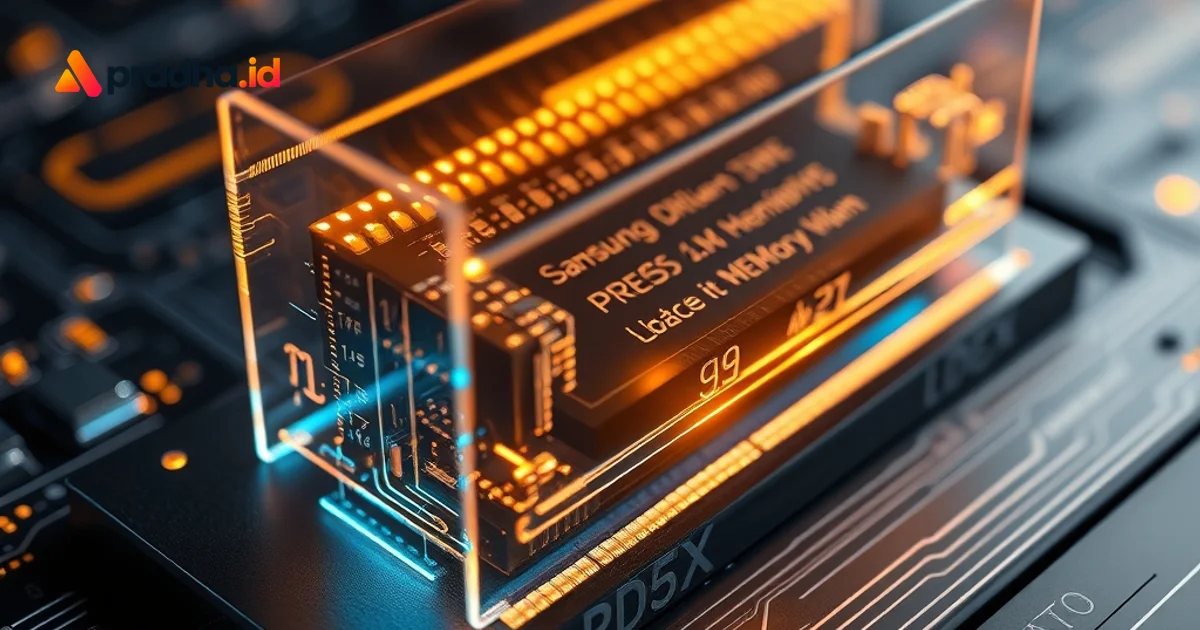
The LPDDR5X-PIM chip is meticulously designed to mirror a standard LPDDR5X-9600 chip, ensuring that it remains compatible with existing system infrastructures. It features 16 banks and utilizes a standard 561-ball array for packaging. However, the critical innovation lies in the integration of a PIM block—specifically Multiply-Accumulate (MAC) units—inside each of the memory banks.
Tom's Hardware notes that the chip uses two 64-bit channels to maintain compatibility while adding intelligence to the hardware. By embedding the MAC units directly where the data resides, the system can perform the heavy mathematical lifting required for AI tensors without needing to shuttle massive amounts of data across the memory bus to the CPU or GPU.
Performance Benchmarks and Bandwidth
This architectural shift results in dramatic performance gains for AI tasks. Tom's Hardware reports that LPDDR5X-PIM is 3.01x faster than standard LPDDR5X in AI inference. This acceleration is driven by a staggering 8x increase in memory bandwidth. Specifically, Ben Houston highlights that the technology exposes 614 GB/s of bank-level bandwidth.
This level of bandwidth is particularly beneficial for local Large Language Model (LLM) inference. In traditional architectures, the speed of an LLM is often limited by how fast weights can be loaded from memory into the processor. By processing these weights within the DRAM itself, Samsung effectively bypasses the primary bottleneck of edge AI.
Targeting the On-Device AI Revolution
Samsung has positioned this as the world's first commercial PIM solution for on-device AI. The industry is currently seeing a push toward "Cognitive Edge Computing," where devices are expected to handle complex reasoning without relying on the cloud. Samsung Galaxy AI already integrates a hybrid of on-device and cloud processing, and LPDDR5X-PIM provides the hardware foundation to move more of that intelligence locally, as noted by Cognitive Edge Computing survey data.
Ked Global reports that the LPDDR5X-PIM is capable of running Meta's 8-billion parameter model, demonstrating its viability for sophisticated AI tasks directly on a device. This capability transforms the smartphone or laptop from a mere interface into a powerful AI node capable of private, offline, and low-latency reasoning.
The Economic Alternative to HBM
The move toward LPDDR5X-PIM is also driven by economic factors. While High Bandwidth Memory (HBM) is the gold standard for data centers, Telset.id indicates that HBM is too expensive for many consumer applications. Making a "smart" LPDDR5X a more accessible alternative allows manufacturers to achieve high-speed AI performance without the prohibitive cost of HBM stacks.
This strategic positioning allows Samsung to capture both the enterprise and consumer markets. While they continue to push the boundaries of high-end memory—showcasing HBM4E and HBM5 at FMS 2026—the LPDDR5X-PIM serves as the bridge for mass-market AI adoption.
Broader Implications for AI Infrastructure
The integration of compute within commodity memory represents a fundamental shift in how AI hardware is conceived. We are moving away from the Von Neumann architecture, where memory and processing are separate, toward a more unified computational fabric. While LPDDR5X-PIM focuses on edge and on-device efficiency, Samsung's wider PIM portfolio includes HBM-PIM for server-grade applications.
RAMXEED reports that HBM-PIM technology can achieve up to a 70% reduction in power consumption compared to conventional processing methods. This is because the energy cost of moving data across a PCB is significantly higher than the cost of the computation itself. By eliminating the trip to the processor, PIM drastically lowers the thermal and power envelope of AI systems.
The Roadmap to Future Memory
Samsung's vision extends beyond a single chip. Happyrock.cloud describes Samsung's FMS 2026 announcements as a "roadmap manifesto" for AI memory architecture, including deep dives into zHBM and zNAND-O 3D stacked memory. These technologies, combined with PIM, suggest a future where memory is no longer a passive storage component but an active participant in the computational process.
Furthermore, the industry is addressing the software challenges of this hardware. Research into PIM-SHERPA highlights the need for software methods to resolve memory attribute and layout inconsistencies in on-device LLM inference, using techniques like DRAM double buffering (DDB) to further optimize the flow of data. This synergy between hardware (LPDDR5X-PIM) and software (PIM-SHERPA) is essential for the next generation of AI-native devices.
As the industry moves toward more complex AI models, the ability to perform math directly within the DRAM reduces the bottlenecks associated with data movement. From the sub-10nm DRAM transistors revealed at IEDM to the massive capacity of HBM3E 12H, Samsung is building a comprehensive ecosystem where memory is the engine of AI, not just the fuel tank.
Sumber / Sources
- Hot Chips 2026: Samsung's Processing-in-Memory (PIM)
- Hot Chips 2026: Samsung makes LPDDR5X smart with logic unit in ...
- Samsung unveils world's 1st commercial processing-in-memory ...
- Samsung's LPDDR5X-PIM: 8x Memory Bandwidth, but a Software ...
- Processing in Memory: DRAM Is About to Do Math - Ben Houston
- Samsung LPDDR5X-PIM Resmi: Memori AI 2,28x Lebih Cepat
Relevant solution
Website Development
Custom website development — fast, modern, ready to sell.
Related Articles
OpenAI Jalapeño: Chip AI Kustom Penantang Nvidia Blackwell
OpenAI meluncurkan Jalapeño, chip AI kustom hasil kolaborasi dengan Broadcom yang mengalahkan Nvidia Blackwell dalam efisiensi daya dan latensi. Simak detail performa dan dampak strategisnya bagi masa depan AI.

Cerebras CS-4: Sistem AI 30x Lebih Cepat dari GPU Nvidia
Cerebras CS-4 hadir mengguncang industri AI dengan chip skala-wafer yang diklaim 30x lebih cepat dari GPU. Temukan bagaimana arsitektur Nexus merevolusi efisiensi energi dan kecepatan inferensi AI.

Apa Itu Serverless Architecture? Keunggulan untuk Bisnis
Ingin website bisnis Anda anti-down meski traffic melonjak? Pelajari bagaimana Serverless Architecture memberikan skalabilitas otomatis dan efisiensi biaya untuk stabilitas maksimal.

Rangers FC: Match Results, Fixtures & Latest Team News
Rangers FC celebrates a thrilling victory over Celtic led by Ryan Naderi. Discover the latest match analysis, upcoming fixtures against Dundee, and exclusive team insights.
Dapatkan Artikel Terbaru!
Berlangganan newsletter kami untuk mendapatkan tips dan insight menarik langsung ke inbox Anda.
Kami tidak akan pernah membagikan email Anda (No Spam).