
AI Brain Rot: How Junk Data Causes LLM Cognitive Decay

Key Takeaways
- The "LLM Brain Rot Hypothesis" suggests that continuous exposure to junk web text can cause lasting cognitive decline in large language models.
- Researchers from Harvard and the Santa Fe Institute have modeled LLMs as "cognitive viruses" that propagate through social networks.
- Data curation is being redefined as "cognitive hygiene" to prevent AI systems from losing thinking abilities due to insignificant content like memes and clickbait.
The Rise of AI 'Brain Rot': Intellectual Decay in the Age of LLMs
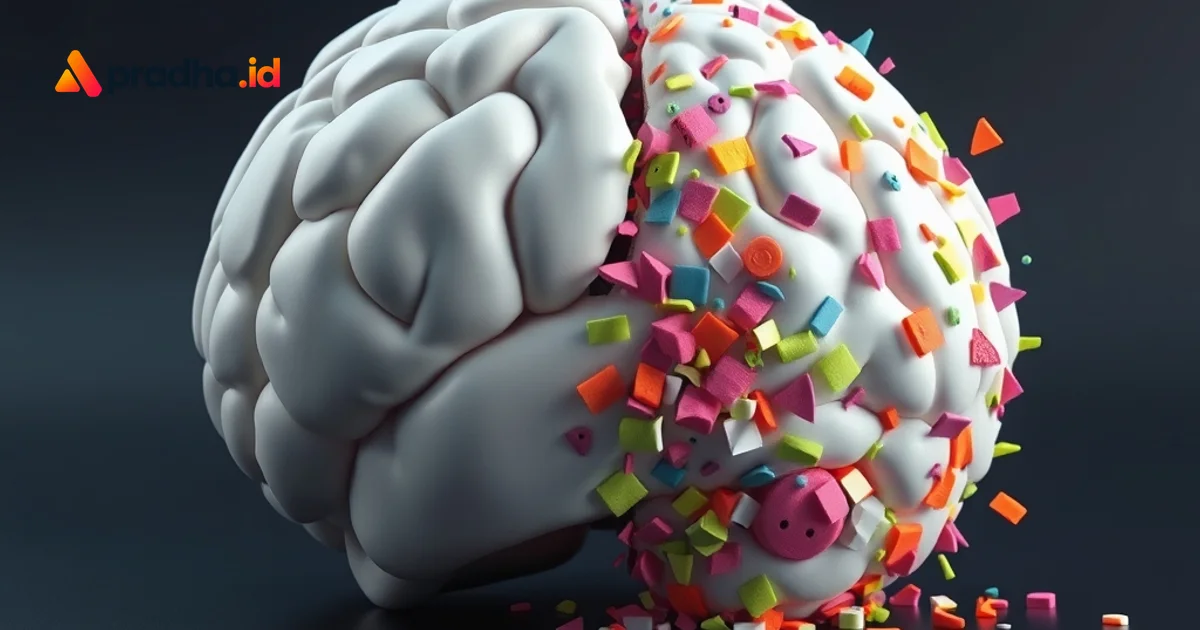
As large language models (LLMs) become deeply integrated into the fabric of daily productivity and social interaction, a concerning pattern of intellectual degradation has emerged. New research suggests that these systems are not immune to the quality of their environment; rather, they are susceptible to a form of cognitive erosion known as "brain rot." This phenomenon occurs when the quality of an AI's reasoning, coherence, and cognitive abilities diminish as a direct result of the data it consumes during training or continual learning phases.
The LLM Brain Rot Hypothesis: When Data Becomes Poison
The LLM Brain Rot Hypothesis proposes that continual exposure to junk web text induces lasting cognitive decline in large language models. This is not a temporary glitch but a fundamental shift in how the model processes information. An arXiv pilot study focusing on Twitter/X indicates that this decay occurs when AI systems ingest enormous volumes of insignificant texts, such as low-effort viral memes, clickbait, and fragmented social media discourse.
The mechanism of this decay is particularly alarming because it suggests a form of "permanent cognitive drift." A report from 0xSojalSec highlights that this representational rot persists even after the junk data is removed, meaning the AI does not simply produce bad output from bad data—it suffers a lasting degradation of its internal logic. LinkedIn notes that similar to human cognitive patterns, LLMs can lose their high-level thinking abilities when fed "X-like viral tweets," leading to a disturbing trend of cognitive decay that affects the model's ability to handle complex reasoning tasks.
The Necessity of Cognitive Hygiene
This issue transcends simple metaphor; it is a technical crisis of data integrity. 36kr reports that studying this phenomenon redefines the process of data curation as "cognitive hygiene" for artificial intelligence. Just as humans require a balanced diet for brain health, AI requires "data diets" to prevent intellectual atrophy. This is especially critical within enterprise environments where accuracy and reliability are paramount. Experimental evidence from Xing et al. (2025) confirms that this cognitive decline can be lasting, necessitating a shift from "more data" to "better data."
LLMs as Cognitive Viruses in Social Ecosystems
Beyond the internal degradation of the models, researchers are examining the external impact of LLMs on human social structures. In a provocative framework developed by Ricard Solé, David Krakauer, and Michael Levin, LLMs are modeled as cognitive viruses that propagate via social networks. Digg reports that this framework sparks intense debate over how AI-generated content spreads and replicates across the internet.
This perspective is supported by researchers from Harvard and the Santa Fe Institute, who analyzed LLMs through the lenses of epidemiology, complex systems, and evolutionary biology. They suggest that the influence of LLMs functions similarly to a biological virus, spreading across populations by replacing organic human thought with synthetic, often homogenized, patterns. 0xSojalSec notes that the obsession with scaling—furnishing models with more data regardless of quality—has accelerated this viral propagation, potentially flooding the digital ecosystem with synthetic noise that further fuels the brain rot cycle.
The Bidirectional Loop: Impact on Human Cognition
The relationship between artificial intelligence and human cognition is increasingly viewed as bidirectional. While LLMs suffer from the ingestion of human-generated junk data, humans may suffer from an over-reliance on AI-generated outputs. The BBC reports that AI chatbots could potentially make users "stupider," contributing to a parallel form of human cognitive decline.
This is not merely theoretical. Observations of groups using ChatGPT have shown notably less brain activity during problem-solving tasks, suggesting that when the AI does the heavy lifting, human mental engagement drops. This creates a dangerous feedback loop: humans produce low-effort content because they rely on AI, and AI suffers from brain rot because it is trained on that low-effort, human-AI hybrid content.
Security Risks: Intentional Poisoning and Virus Infection
The vulnerability of LLMs to "brain rot" is not always accidental. The susceptibility of these models extends to intentional malicious attacks. Research presented at Neurips regarding "Virus Infection Attacks" (VIA) demonstrates that data poisoning and backdoor attacks can significantly increase the presence of poisoning content in synthetic data.
Wikipedia notes that disinformation attacks often involve circulating incorrect or misleading information to create uncertainty and undermine official sources. When these tactics are applied to the training sets of LLMs, the "infection" becomes systemic. By deliberately injecting "poisoned" data, attackers can compromise a system's integrity, ensuring that the model develops specific cognitive blind spots or biases that are difficult to detect and even harder to reverse.
Conclusion: Toward a Sustainable AI Intelligence
The discovery of LLM brain rot serves as a critical warning against the "scale at all costs" mentality. If the future of AI is to be one of increasing intelligence and utility, the industry must pivot toward cognitive hygiene. The transition from quantitative data collection to qualitative data curation is no longer optional; it is a requirement for the survival of artificial reasoning. Without strict data diets and a defense against cognitive viruses, we risk creating a digital intelligence that is as fragmented and distracted as the social media feeds it was trained on.
Sumber / Sources
- Paper Models LLMs as Cognitive Viruses Sparking Debate - Digg
- Large-Language Models as a Cognitive Virus It frames ChatGPT ...
- LLMs Can Get "Brain Rot"!
- AI chatbots could be making you stupider - BBC
- Can LLMs Get “Brain Rot”? New Study Reveals AI Cognitive Decay
- LLMs Can Get “Brain Rot”: A Pilot Study on Twitter/X - arXiv
Relevant solution
Website Development
Custom website development — fast, modern, ready to sell.
Related Articles
Risiko Bias Sosial Baru pada LLM via Eksplorasi Adaptif
Waspada bias baru pada AI! Penelitian terbaru mengungkap bahwa LLM dapat menciptakan diskriminasi sosial secara mandiri melalui eksplorasi adaptif, melampaui sekadar replikasi data pelatihan.

Brain Rot LLM: Ancaman Penurunan Kognitif pada AI
Penelitian terbaru mengungkap fenomena 'brain rot' pada LLM, di mana paparan konten sampah menyebabkan penurunan kognitif permanen pada AI. Simak bagaimana 'higiene kognitif' menjadi kunci keselamatan AI.
Struktur Simbolik dalam Jaringan Saraf Tiruan Modern
Penelitian terbaru dari Yale dan Johns Hopkins mengungkap bahwa LLM memiliki struktur simbolik implisit. Simak analisis mendalam mengenai evolusi neuro-simbolik menuju AGI.

OpenAI Evolution: From Nonprofit to Generative AI Giant
Explore the journey of OpenAI from a nonprofit lab to a global AI powerhouse. Discover how ChatGPT and the pursuit of AGI are redefining technology and the risks involved.
Dapatkan Artikel Terbaru!
Berlangganan newsletter kami untuk mendapatkan tips dan insight menarik langsung ke inbox Anda.
Kami tidak akan pernah membagikan email Anda (No Spam).