
Browser-Based Virtual Theremins: Music via Hand Tracking

Key Takeaways
- Modern browser-based theremins use webcams and hand-tracking technology to allow users to create music without physical contact.
- These tools typically control pitch and volume through hand movements on different axes, mirroring the experience of the original 1920s instrument.
- Most of these applications are free, require no hardware or downloads, and utilize browser-native technologies like the Web Audio API.
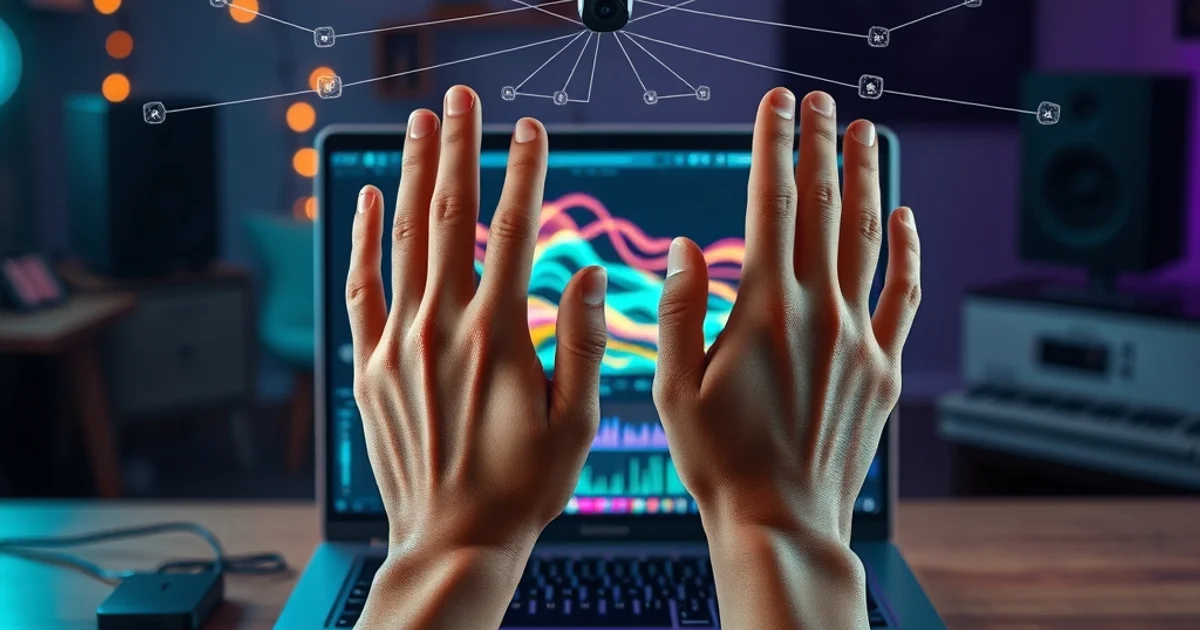
The theremin, an instrument originating in the 1920s, was traditionally played by moving hands through two electromagnetic fields to control pitch and volume. For nearly a century, this eerie, sliding sound was the hallmark of science fiction cinema and avant-garde composition. Today, this touchless experience is being reimagined for the digital age through a variety of browser-based applications that replace physical electromagnetic fields with webcam-based hand tracking.
The Evolution of Touchless Music: From Hardware to Browser
The transition from physical hardware to browser-based software represents a significant shift in "digital lutherie"—the art of designing digital musical instruments. While the original theremin required specialized circuitry and antennas, modern versions leverage the ubiquitous nature of the laptop webcam. According to Polina Shopina, the theremin was specifically chosen for this digital adaptation because its fundamental nature is contact-free. This makes the act of waving hands in front of a webcam a more intuitive and realistic experience than attempting to simulate the tactile resistance of a guitar string or a drum skin in thin air.
This evolution is part of a broader trend in gesture-based interactive music. As noted in research regarding the digitization of the Chinese Erhu, the original framework of the theremin laid the foundation for all subsequent gesture-based instruments. By decoupling the sound production from physical contact, developers are now exploring how spatial movement can be mapped to complex sonic parameters.
How Virtual Theremins Work: The Technical Stack
Unlike traditional instruments, these virtual versions allow users to create music by waving their hands in front of a camera. This is made possible by a combination of high-performance JavaScript libraries and browser APIs that allow for real-time processing without the need for external plugins.
Web Audio API and MediaPipe
Technically, these tools leverage modern web capabilities to minimize latency—the gap between a hand movement and the resulting sound. For example, the Video Theremin utilizes the Web Audio API for sound synthesis and MediaPipe Hands to track hand positions. MediaPipe, developed by Google, allows the browser to identify specific landmarks on the human hand in real time, converting X, Y, and Z coordinates into data points that the Web Audio API can use to modulate frequency (pitch) and gain (volume).
Privacy and Local Processing
A critical concern for users interacting with webcams is privacy. To address this, many modern implementations, such as the PS-AER Theremin, track hand movements for pitch and volume directly within the browser's local environment. This ensures that the video feed is processed on the client side and that sensitive visual data is never uploaded to a remote server, maintaining a secure user experience.
Control Mechanisms and User Experience
While the core concept remains the same—controlling sound via motion—different applications implement specific gesture controls to vary the expressive quality of the instrument. This mapping of movement to sound is where the "feel" of the instrument is created.
- Air Theremin: This application focuses on spatial expansion. Users wave both hands at the camera, spreading them apart to control volume and raising them to adjust pitch. To add nuance, leaning back softens the tone, while bringing the palms together creates total silence, mimicking the "damping" effect of physical instruments.
- Bard: The Theremini App: This browser-native pocket synth assigns pitch to one axis and volume to another. By maintaining a design with no keys or frets, it preserves the glissando (sliding) effect that makes the theremin unique.
- Theremin.live: To assist those without formal musical training, this version snaps the webcam-tracked pitch and volume to a specific musical scale. This prevents the "random" noise often associated with beginner theremin playing and allows users to create melodic sequences more easily.
- gesture.live: Developed by Robin van Soelen, this free browser instrument further simplifies the interface, allowing users to engage with hand gestures immediately upon loading the page.
Expanding the Horizon: Beyond the Theremin
The success of the virtual theremin has paved the way for more ambitious gesture-controlled platforms. The industry is moving toward "embodied performance," where the entire body becomes the controller. For instance, the Gesture Synth platform allows users to play not only the theremin but also the piano, flute, drums, and chords using hand gestures via a webcam.
This expansion is mirrored in academic and professional research. In the development of the "CLOUD TANK" virtual reality instrument, performers mix spatialized audio and drive reactive video layers through hand-pose recognition, demonstrating that gesture control can extend beyond simple melody into full-scale audiovisual production. Similarly, AR finger drumming has shown that a browser tab and a webcam can replace a MIDI keyboard entirely, turning hand gestures into a real-time rhythmic controller.
Accessibility and the Future of Digital Instruments
One of the primary advantages of these virtual instruments is their accessibility. Traditionally, learning the theremin required purchasing expensive hardware and mastering a difficult physical technique. Now, many of these tools are free and require no special equipment, downloads, or installations. Because they run natively in the browser, they turn standard hardware—like a laptop webcam—into a sophisticated musical interface.
Furthermore, developers are incorporating fallback options, such as mouse control, for users who cannot use a webcam or who have limited mobility. This inclusivity ensures that the joy of touchless music is available to a wider audience.
As we look forward, the integration of pseudo-haptics in social VR and the use of hybrid computing architectures for real-time robotics suggest that the boundary between the physical and digital instrument will continue to blur. The virtual theremin is not just a novelty; it is a gateway to a future where music is created not by pressing buttons, but by the intuitive movement of the human body in space.
Sumber / Sources
Relevant solution
Website Development
Custom website development — fast, modern, ready to sell.
Related Articles
Main Theremin Virtual via Browser & Webcam: Inovasi Musik AI
Ubah webcam Anda menjadi instrumen musik unik! Pelajari bagaimana teknologi MediaPipe dan Web Audio API memungkinkan Anda bermain theremin virtual langsung dari browser tanpa kontak fisik.

Mercury 2.5: Inception's High-Speed Diffusion LLM Explained
Inception Labs unveils Mercury 2.5, a diffusion-based LLM hitting 1,107 tokens per second. Explore how its parallel refinement architecture eliminates latency to redefine AI reasoning.

AI Sales Assistant WhatsApp: Ubah Chat Jadi Transaksi
Ubah chat WhatsApp yang pasif menjadi mesin transaksi real-time. Pelajari bagaimana AI Sales Assistant dan WhatsApp Business API dapat mengotomatisasi stok, rekomendasi, hingga pembayaran.

Teknologi F-35 Lightning II: Inovasi & Tantangan Keamanan
Menjelajahi kecanggihan F-35 Lightning II sebagai force multiplier global, ekspansi operasional di berbagai negara, hingga investigasi Pentagon atas kebocoran komponen sensitif ke China.
Dapatkan Artikel Terbaru!
Berlangganan newsletter kami untuk mendapatkan tips dan insight menarik langsung ke inbox Anda.
Kami tidak akan pernah membagikan email Anda (No Spam).