
What is a Silver Alert? Guide to Locating Missing Seniors

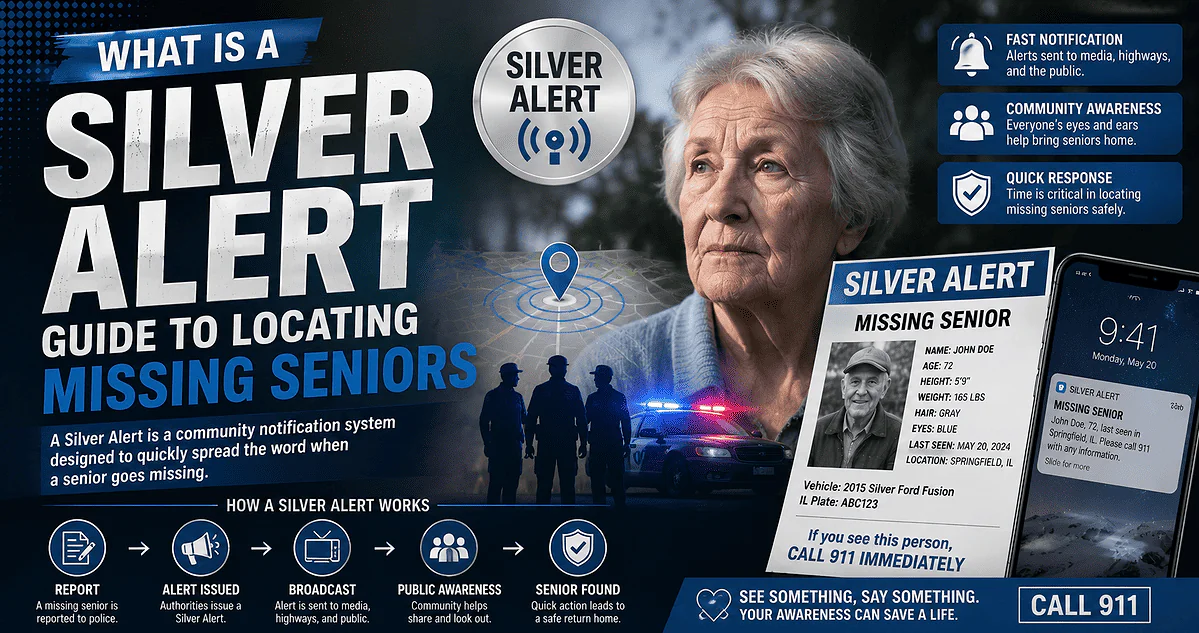
Understanding the Silver Alert: A Vital Tool for Locating Missing Seniors
When a loved one disappears, every second counts. For families dealing with seniors who suffer from cognitive impairments, the Silver Alert system serves as a critical resource in the effort to bring missing individuals home safely. The anxiety of a missing family member is compounded when that person is vulnerable, unable to communicate their needs, or disoriented due to medical conditions. This is where the Silver Alert system steps in, transforming a desperate search into a coordinated community effort.
What is a Silver Alert?
A Silver Alert is a public notification system used primarily in the United States to broadcast information about missing persons, with a primary focus on senior citizens. According to Merriam-Webster, it is a "widely publicized bulletin" designed to alert the public when an elderly person or someone with a cognitive disability goes missing.
The system functions similarly to the AMBER Alert used for children. While AMBER Alerts focus on the immediate danger of child abduction, Silver Alerts are tailored to the specific needs of the elderly and those with cognitive disabilities who may wander away from home or become lost. To enlist the help of the general public, Silver Alerts utilize a variety of communication channels, including local emergency alerts, media broadcasts, social media notifications, and electronic highway signs.
Who Qualifies for a Silver Alert?
While the system is generally associated with the elderly, specific criteria determine when an alert is issued. These criteria can vary by state, but the core objective remains the same: protecting those who cannot protect themselves.
- Age Requirements: In many jurisdictions, such as Florida, the Florida Department of Law Enforcement states that a missing person must be 60 years of age or older to trigger a standard Silver Alert.
- Cognitive Impairment: The alert is not based solely on age. It can be issued for individuals between 18 and 59 years of age if law enforcement determines that the person lacks the capacity to care for themselves due to a cognitive or developmental disability.
- Medical Conditions: These alerts are particularly essential for those living with Alzheimer's disease, dementia, or traumatic brain injuries (TBI) that may cause them to become disoriented, wander, or forget their current location.
How the Silver Alert System Operates
The effectiveness of a Silver Alert relies on a highly coordinated network of agencies. It is not a single entity but a partnership between various levels of government and the private sector. For example, in Alaska, the system is described as a "voluntary partnership" involving state and local government, law enforcement agencies, and media broadcasters.
The Activation Process
The process typically begins when a family member or caregiver reports a person missing to local law enforcement. Once the police determine that the individual is at risk—meaning they are unable to navigate their environment safely or are in medical danger—the Silver Alert is activated. This triggers a cascade of notifications:
- Law Enforcement Coordination: Local police and emergency responders coordinate a unified response, sharing information across jurisdictions.
- Public Broadcasting: Information is pushed to television and radio stations, ensuring that people in the immediate area are aware of the search.
- Digital Integration: Modern systems now include social media alerts and mobile notifications, allowing information to spread virally and reach thousands of people in seconds.
- Infrastructure Alerts: Highway signs are updated to display the missing person's description, alerting commuters who may be traveling in the direction the person wandered.
The Role of Modern Technology in Recovery
As technology evolves, the Silver Alert system is becoming more sophisticated. Beyond simple broadcasts, law enforcement agencies are integrating new tools to narrow the search area and identify missing seniors more quickly.
In some regions, such as Shasta County, California, authorities have begun utilizing automated license plate readers (ALPRs). If a missing senior was last seen in a vehicle, these readers can alert police the moment that vehicle passes a camera, drastically reducing the time it takes to locate the individual. Additionally, GPS tracking devices and wearable technology are increasingly being used by families to provide real-time data to responders once a Silver Alert is active.
Examples of Alert Details: What the Public Sees
When an alert is issued, the goal is to provide enough specific identifying information so that a stranger can recognize the individual immediately. This typically includes:
- Full name and age: To help identify the person and understand their general physical stage of life.
- Physical descriptions: This includes height, weight, hair color, eye color, and any distinguishing marks (such as tattoos or scars).
- Clothing: A description of what the person was wearing when last seen is crucial, as clothing is one of the first things a witness notices.
- The date and time they were last seen: This helps law enforcement establish a timeline and a search perimeter.
- The last known location: This provides the starting point for the search grid.
The Impact of Public Assistance and Community Vigilance
By turning the search for a missing senior into a community-wide effort, Silver Alerts significantly increase the likelihood of a swift recovery. The "eyes and ears" of the public are often more effective than a police search alone, especially in rural or densely populated urban areas where a disoriented senior might blend in or hide.
Silver Alerts play a vital role in safely locating older adults who go missing due to dementia or other cognitive conditions. Every minute counts when a vulnerable adult is exposed to the elements or medical distress.
The integration of law enforcement and public vigilance ensures that vulnerable adults are located and returned to their families as quickly as possible. In many cases, a simple phone call from a concerned citizen who noticed an elderly person walking alone can be the difference between a tragic outcome and a happy reunion.
Preventing the Need for a Silver Alert: Tips for Families
While the Silver Alert system is a lifesaver, the best strategy is prevention. For those caring for seniors with dementia or Alzheimer's, several steps can be taken to reduce the risk of wandering:
- Install Door Alarms: Simple chimes or alarms can notify caregivers the moment a senior opens a door.
- Use Identification Jewelry: ID bracelets or necklaces with the person's name and a contact number can help a stranger return them home without needing a full alert.
- GPS Tracking: Wearable GPS devices or AirTags can provide real-time location data.
- Create a 'Safe Zone': Ensure the home environment is secure and that the senior has engaging activities to reduce the urge to wander.
Conclusion
The Silver Alert system is more than just a notification; it is a safety net for the most vulnerable members of our society. By bridging the gap between law enforcement, the media, and the general public, it creates a powerful mechanism for rescue. Whether through the use of high-tech license plate readers or the simple vigilance of a neighbor, the Silver Alert ensures that no senior is truly alone when they lose their way.
Relevant solution
ePWS Puskesmas
Digital reporting for public health centers (Puskesmas).
Related Articles

Chicago Cubs 2026 Playoff Push: NL Wild Card Race Update
The Chicago Cubs are fighting for the top NL Wild Card spot with an 84-68 record. Despite the Brewers clinching the NL Central, Chicago holds a vital tiebreaker over the Phillies.

Duop Reath: From Portland Sniper to NBA Free Agency
From a two-way contract in Portland to becoming a prime target for the New York Knicks, Duop Reath's NBA journey is a masterclass in resilience. Discover how the South Sudanese-Australian sniper overcame a season-ending injury to remain one of the league's most coveted stretch-fives.

Texas Rangers 2026 Guide: Highlights, Theme Nights & News
Explore the Texas Rangers' 2026 season, featuring Jacob deGrom's pitching dominance and a historic promotional calendar. From Negro League tributes to the state-of-the-art Globe Life Field, discover how the Rangers are blending victory with community.

FDNY Guide: Protecting New York City's Life and Property
Explore the inner workings of the FDNY, from the grueling 18-week Fire Academy and specialized rescue medicine to the solemn traditions of remembrance and community outreach in NYC.
Dapatkan Artikel Terbaru!
Berlangganan newsletter kami untuk mendapatkan tips dan insight menarik langsung ke inbox Anda.
Kami tidak akan pernah membagikan email Anda (No Spam).