
What is an AMBER Alert? How the Child Recovery System Works

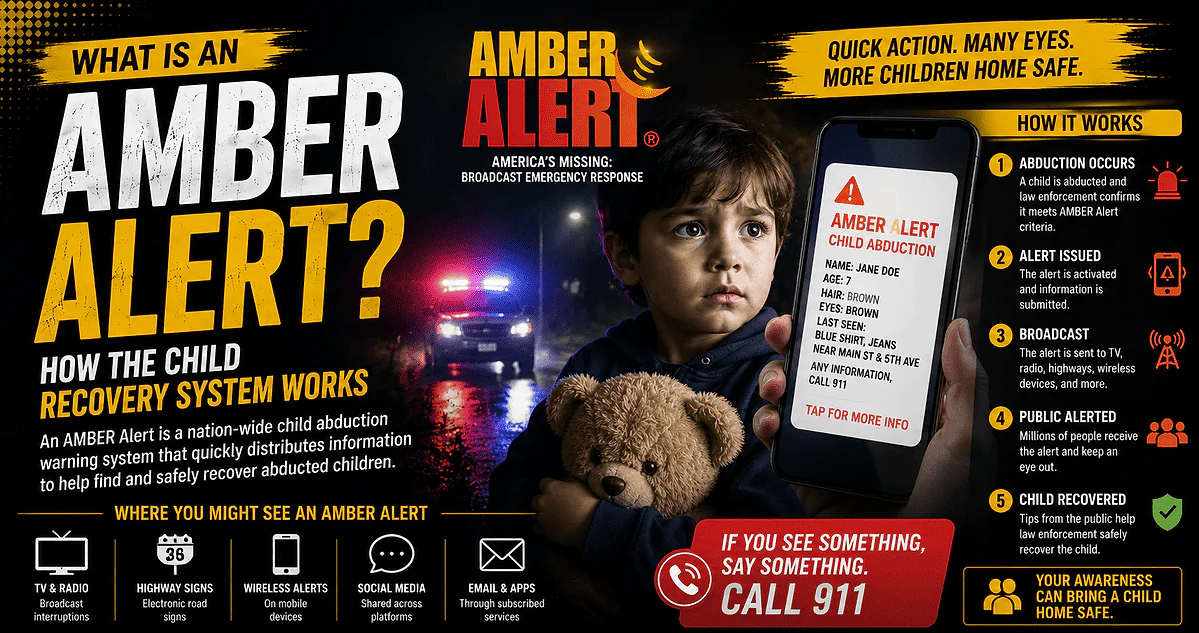
Understanding the AMBER Alert System: A Critical Tool for Child Recovery
The abduction of a child is one of the most harrowing crises a family and a community can face. In these high-stakes scenarios, time is the most critical factor. The AMBER Alert system was developed specifically to bridge the gap between the moment a child is taken and the moment the public can assist in their recovery. By transforming a local police search into a massive, community-wide effort, the system leverages modern technology to create a virtual dragnet that makes it significantly harder for abductors to remain undetected.
What Exactly is an AMBER Alert?
An AMBER Alert is a specialized public-abduction alert tool designed to notify the public in cases of worrying or life-threatening child abductions. While many people assume any missing child report triggers an alert, the criteria are actually quite strict. According to Merriam-Webster and law enforcement guidelines, these alerts are issued when a child under the age of 18 is abducted and is believed to be in imminent danger of death or serious bodily injury.
It is crucial to understand that the AMBER Alert is not the only tool used to find missing children. It is one component of a broader, multi-layered missing-child system. Many children are recovered through traditional police work, canine units, and other specialized investigative techniques without the need for a public broadcast. The AMBER Alert is reserved for the most serious cases where the risk of harm is immediate and the public's eyes and ears are deemed necessary for a successful rescue.
The Origin and Legacy of the System
The system is named after Amber Hagerman, a nine-year-old girl who was abducted and murdered in 1996. The tragedy of her death highlighted the need for a more rapid and coordinated public notification system. What began as a local effort in Texas eventually evolved into a national standard in the United States and later inspired similar systems worldwide. The legacy of Amber Hagerman lives on through a system that has saved thousands of children from similar fates.
How the AMBER Alert System Works
The primary goal of an AMBER Alert is to instantly galvanize the community to help search for and safely recover a missing child. The process begins when law enforcement confirms that an abduction has occurred and that the specific criteria for an alert have been met. Once activated, the National Center for Missing & Exploited Children (NCMEC) and local authorities facilitate the distribution of warnings across a vast array of platforms to ensure maximum visibility.
Distribution Channels
To reach as many people as possible, the system utilizes a diverse mix of communication technologies:
- Wireless Emergency Alerts (WEA): Direct notifications sent to cellphones and text messages, often accompanied by a distinct sound and vibration to grab attention.
- Broadcast Media: Emergency crawls and audio interruptions on radio and television broadcasts.
- Digital Infrastructure: Electronic road signs (Dynamic Message Signs) on highways to alert drivers of suspect vehicle descriptions.
- Hospitality and Commercial Networks: Partnerships with hotel chains and other businesses to display alerts in high-traffic areas.
- Internet and Data Technology: Integration with internet service providers, social media platforms, and data-enabled technology to spread the word virally.
Global Reach and Implementation
In the United States, the system is utilized across all 50 states, the District of Columbia, and Indian territories. However, the concept of rapid public notification has expanded far beyond U.S. borders. For example, the Ontario AMBER Alert in Canada serves as a vital warning system to quickly alert the public of suspected abductions where children are in imminent danger.
In Europe, the AMBER Alert Europe Foundation has played a pivotal role in standardizing these responses. They established the Police Expert Network on Missing Persons (PEN-MP), a specialized network consisting of law enforcement experts who share best practices and coordinate cross-border efforts to recover missing children in a highly mobile society.
Analyzing Impact and Effectiveness
The effectiveness of the AMBER Alert system is often debated, but the statistics generally support its utility. Data provided by the NCMEC indicates that in previous reporting years, the vast majority of issued alerts resulted in the recovery of the child. For instance, in one specific dataset, out of 138 AMBER Alerts issued, all but two resulted in a recovery. More importantly, a significant portion of these recoveries—such as 36 in that specific group—were a direct result of the AMBER Alert itself, meaning a member of the public spotted the child or the vehicle and contacted authorities.
The AMBER Alert system is a proven public tool that has helped recover thousands of children. While it is not a silver bullet, it provides a critical layer of visibility that can be the difference between life and death.
Limitations and Challenges
Despite its success, the system is not without limitations. Critics and experts point out several challenges:
- Alert Fatigue: When alerts are issued too frequently or for cases that do not meet the strict "imminent danger" criteria, the public may begin to ignore them.
- Geographic Gaps: Some users report receiving alerts for children missing hundreds of miles away while missing local alerts due to cell tower configurations and regional settings.
- The "Abductor Relationship": Research suggests that the relationship between the abductor and the child often determines the outcome more than the alert itself. For example, parental abductions may be harder to resolve via public alerts than stranger abductions.
Accessibility and Public Monitoring
To keep the public informed and engaged, various digital tools have been developed to provide real-time information. This ensures that the community doesn't have to wait for a siren or a text message to be aware of a crisis.
Mobile Applications and Portals
There are now mobile applications dedicated to tracking current alerts, providing archives of previous cases, and maintaining alert counters. This transparency allows the public to see the system's activity and stay vigilant. Furthermore, state-level law enforcement agencies, such as the Nebraska State Patrol and the Louisiana State Police, maintain dedicated web portals. These portals list active alerts for their respective jurisdictions, ensuring that the community has immediate access to critical information, such as vehicle make, model, and license plate numbers.
What to Do When You Receive an Alert
When an AMBER Alert hits your phone or appears on a highway sign, your role as a citizen is vital. Here are the steps you should take to be an effective part of the recovery effort:
- Read the Details Carefully: Note the description of the child, the suspect, and especially the vehicle (color, make, model, and plate).
- Stay Observant: If you are driving, keep an eye out for vehicles matching the description. If you are at home, be aware of your surroundings.
- Do Not Attempt a Rescue: If you spot the suspect or the child, do not attempt to confront the abductor. This could put the child in further danger.
- Call 911 Immediately: Report your sighting to emergency services immediately. Provide your exact location and the direction the vehicle was traveling.
The Future of Child Recovery Technology
As technology evolves, the AMBER Alert system continues to adapt. We are seeing a shift toward more precise geolocation targeting, which helps reduce "alert fatigue" by notifying only those in the immediate path of a suspect vehicle. Additionally, the integration of AI and big data in analyzing traffic patterns and surveillance footage is complementing the public alert system, creating a more comprehensive safety net for the most vulnerable members of society.
Relevant solution
Website Development
Custom website development — fast, modern, ready to sell.
Related Articles

Texas Rangers 2026 Guide: Highlights, Theme Nights & News
Explore the Texas Rangers' 2026 season, featuring Jacob deGrom's pitching dominance and a historic promotional calendar. From Negro League tributes to the state-of-the-art Globe Life Field, discover how the Rangers are blending victory with community.

Kualitas Udara Kota Padang Berbahaya: Analisis AQI & PM2.5
Kualitas udara Kota Padang sempat mencapai level berbahaya dengan AQI 427 dan PM2.5 melonjak 105,7 kali standar WHO. Simak analisis fluktuasi polusi dan dampaknya bagi kesehatan warga.

Wayback Machine Terancam: Blokir Penerbit & Lonjakan Trafik
Wayback Machine kini berada di titik kritis, menghadapi pemblokiran masif oleh penerbit berita akibat isu AI serta serangan trafik otomatis yang mengganggu stabilitas layanan.

FDNY Guide: Protecting New York City's Life and Property
Explore the inner workings of the FDNY, from the grueling 18-week Fire Academy and specialized rescue medicine to the solemn traditions of remembrance and community outreach in NYC.
Dapatkan Artikel Terbaru!
Berlangganan newsletter kami untuk mendapatkan tips dan insight menarik langsung ke inbox Anda.
Kami tidak akan pernah membagikan email Anda (No Spam).