
What is Radar? How Radar Technology Works & Applications

Key Takeaways
- Radar (Radio Detection and Ranging) is an electromagnetic sensor used to detect, track, and recognize objects by observing returned echoes.
- Modern applications range from weather monitoring and precipitation tracking to specialized health monitoring and elderly care.
- The technology has evolved into various forms, including location infrastructure APIs and non-contact millimeter-wave sensors.
Understanding Radar Technology: From Electromagnetic Sensing to Modern Applications
In the modern era, we often take for granted the invisible waves that allow airplanes to land in thick fog, meteorologists to predict devastating storms, and smartphones to provide hyper-local alerts. At the heart of these capabilities is Radar, an abbreviation for Radio Detection and Ranging. Radar is a sophisticated electronic sensing system that leverages the fundamental properties of electromagnetic waves to perceive the world beyond the limits of human vision.
What Exactly is Radar?
At its most basic level, radar is an electromagnetic sensor designed for detecting, locating, tracking, and recognizing various types of objects—referred to as "targets"—at considerable distances. Unlike optical cameras that rely on visible light, radar generates its own energy source, allowing it to operate effectively in total darkness, heavy rain, or dense fog.
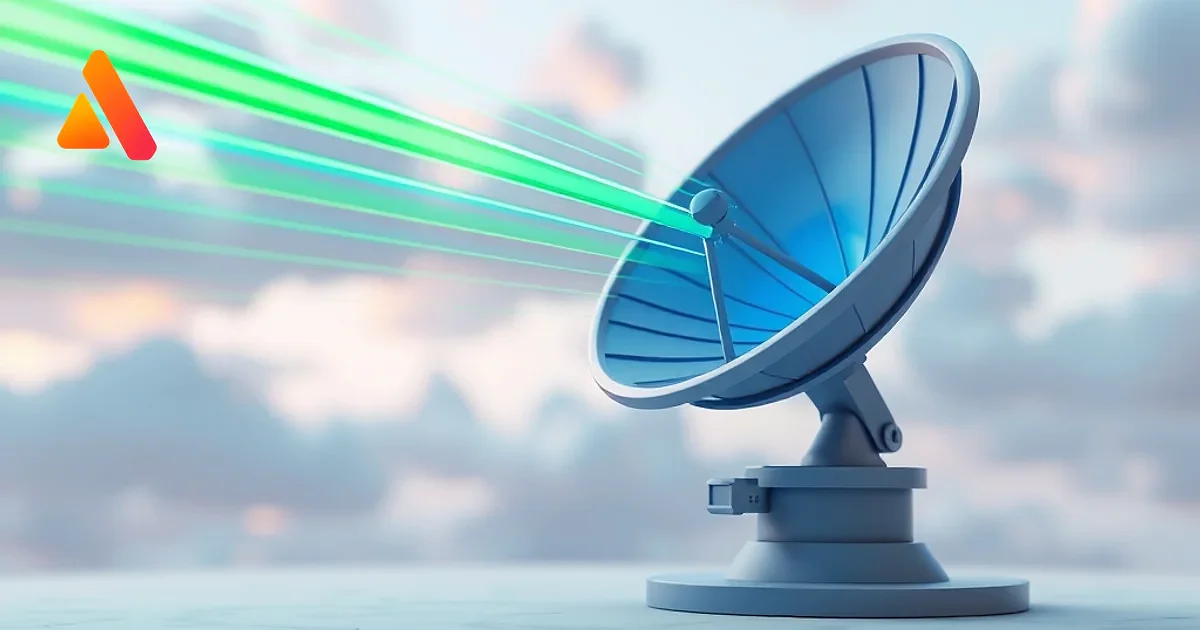
The fundamental operation of a radar system follows a logical sequence: Transmit → Reflect → Receive → Analyze. The system produces a high-frequency electromagnetic pulse using a source such as a magnetron, klystron, or a modern solid-state oscillator. This pulse is amplified and directed by an antenna into a focused beam. When this beam encounters an object, a portion of the energy is reflected back toward the source as an "echo." By measuring the precise time delay between the transmission of the pulse and the reception of the echo, the system can calculate the distance to the target with extreme accuracy.
The Science Behind the Signal: How It Works
To understand how radar provides such detailed information, we must look at three primary physical properties it measures:
- Distance (Range): Since electromagnetic waves travel at the speed of light, the time it takes for a signal to travel to a target and back provides a direct measurement of distance.
- Velocity (The Doppler Effect): By analyzing the change in frequency of the returning signal, radar can determine if an object is moving toward or away from the sensor. This is known as the Doppler shift, which is critical for tracking aircraft and monitoring weather patterns.
- Direction (Azimuth and Elevation): By utilizing the orientation of the antenna or using phased-array systems (which steer the beam electronically), radar can determine the exact angular position of a target in 3D space.
Weather Monitoring and Precipitation Tracking
One of the most critical civilian applications of radar technology is in the field of meteorology. Weather radar, specifically Doppler radar, allows scientists to "see" inside a storm. By detecting the movement of precipitation particles, meteorologists can identify the rotation within a thunderstorm, which is a primary indicator of tornado formation.
Modern weather monitoring is a global collaborative effort. For instance, RainViewer provides live radar maps updated every 10 minutes, synthesizing data from over 1,000 global sources, including EUMETNET and NOAA. Similarly, the National Weather Service (NWS) integrates radar displays with real-time alerts and forecasts, offering OGC-compliant services that allow other applications to integrate this life-saving data.
In Indonesia, the BMKG (Badan Meteorologi, Klimatologi, dan Geofisika) manages a network of weather radars to monitor tropical precipitation and volcanic ash clouds. Because this data is critical for national safety, BMKG mandates that any third-party use of their radar data must clearly credit the agency and display their official logo.
Diversified Modern Applications
While radar began as a tool for war and aviation, it has branched into highly specialized fields that impact health, urban planning, and administration.
1. Health and Care Technology
The emergence of millimeter-wave (mmWave) technology has revolutionized healthcare. Companies like Hikvision have developed "Auxiliary Care Radar," a non-contact sensing system. Unlike cameras, which raise privacy concerns in bedrooms or bathrooms, radar can monitor a patient's breathing patterns, detect falls, and track movement without capturing identifiable images. This makes it an ideal tool for elderly care and rehabilitation centers.
2. Location Intelligence and Geofencing
In the digital realm, "radar" is often used metaphorically in software, but it relies on the same principles of detection and ranging. Modern location intelligence platforms use SDKs and APIs to collect real-time data from IP addresses, Wi-Fi signals, and GPS. This allows businesses to trigger "geofences," sending a notification to a user's phone the moment they enter a specific physical radius of a store or event.
3. Administrative and Environmental Monitoring
Radar is also applied to systemic monitoring. For example, Radar SiKLUS is an information system used to track the progress of environmental standards from their initial formulation to their final establishment. While this is a management tool rather than a physical sensor, it adopts the radar philosophy of "scanning" a landscape to identify gaps and track progress.
4. Automotive Safety and Autonomous Driving
Perhaps the most visible modern use of radar is in the automotive industry. Adaptive Cruise Control (ACC), Blind Spot Detection, and Automatic Emergency Braking (AEB) all rely on short-range radar sensors. These sensors continuously scan the area around the vehicle, providing a layer of safety that complements cameras and LiDAR by functioning reliably in heavy rain or snow where optical sensors often fail.
Challenges and Limitations
Despite its power, radar is not infallible. It can experience interference or "clutter"—false readings caused by reflections from the ground, buildings, or electromagnetic noise. Different materials also reflect waves differently; a stealth aircraft, for example, is designed with a geometry and coating that absorbs or scatters radar waves, making it "invisible" to traditional sensing.
Impact on Daily Life and the Future
The integration of radar-based data into consumer mobile applications has fundamentally changed how we navigate the world. Many drivers now use apps that leverage crowdsourced speed and location data to avoid unexpected speed traps and expensive traffic fines, essentially creating a "social radar" for the road.
Looking forward, the evolution of Synthetic Aperture Radar (SAR) is opening new frontiers in remote sensing. SAR allows for high-resolution imaging of the Earth's surface from space, regardless of cloud cover or light conditions, enabling us to monitor deforestation, glacial melt, and urban expansion in real-time.
Relevant solution
Website Development
Custom website development — fast, modern, ready to sell.
Related Articles

AI Document Processing: Digitalisasi Rekam Medis & Form Kesehatan
Ubah tumpukan rekam medis kertas menjadi data digital terstruktur dengan AI Document Processing dan PWS Pradha. Tingkatkan akurasi data, percepat pelaporan, dan optimalkan layanan kesehatan Anda sekarang.

Otomasi Invoice & Kuitansi dengan AI Document Processing
Ubah proses input invoice manual yang memakan waktu berhari-hari menjadi hitungan jam. Pelajari bagaimana AI Document Processing mengeliminasi human error dan meningkatkan akurasi laporan keuangan.

Mercury 2.5: Inception's High-Speed Diffusion LLM Explained
Inception Labs unveils Mercury 2.5, a diffusion-based LLM hitting 1,107 tokens per second. Explore how its parallel refinement architecture eliminates latency to redefine AI reasoning.
Qualcomm Bawa Linux ke Snapdragon X2: Era Baru AI PC ARM
Qualcomm resmi membawa dukungan Linux ke Snapdragon X2 Series untuk memperkuat ekosistem AI PC. Debian dan Ubuntu dijadwalkan hadir pada 2026, dengan laptop Linux pertama siap meluncur tahun 2027.
Dapatkan Artikel Terbaru!
Berlangganan newsletter kami untuk mendapatkan tips dan insight menarik langsung ke inbox Anda.
Kami tidak akan pernah membagikan email Anda (No Spam).