
S. Korea Estimates North Korea Has 80-120 Nuclear Warheads

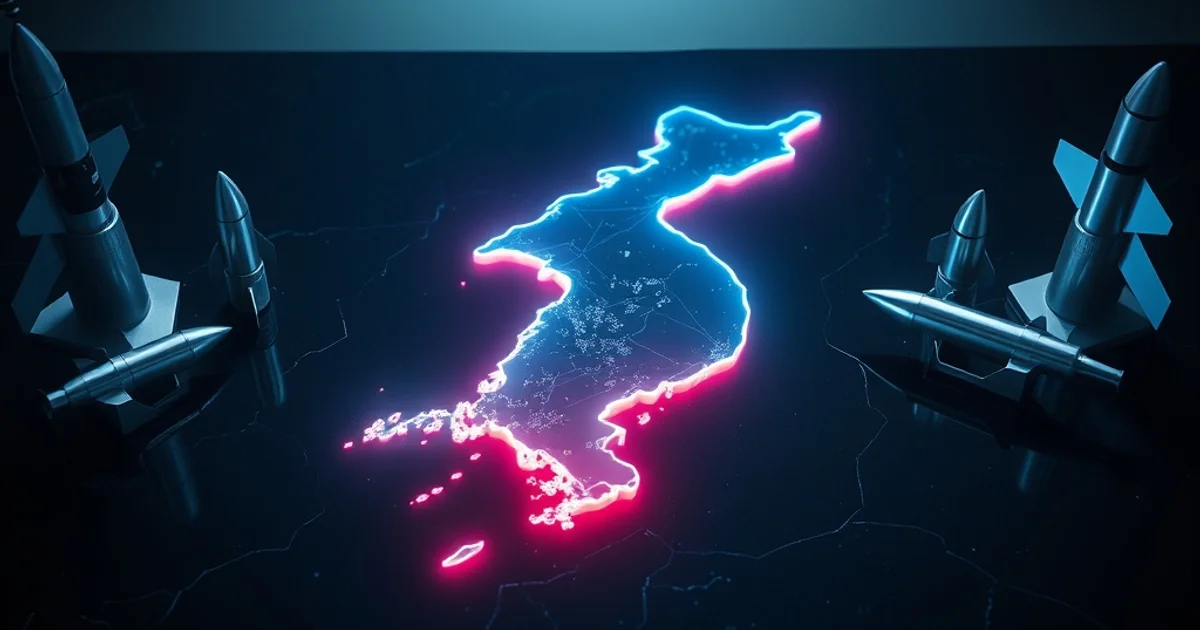
Key Takeaways
- Defense Minister Ahn Kyu-baek estimates North Korea possesses between 80 and 120 nuclear weapons.
- The Minister noted that providing a more precise figure is significantly restricted.
- This estimate differs from a figure of 57 nuclear weapons previously mentioned by former U.S. President Donald Trump.
South Korean Defense Ministry Discloses North Korean Nuclear Estimates
On August 20, 2026, South Korean Defense Minister Ahn Gyu-back provided a critical government estimate regarding the scale of North Korea's nuclear arsenal. During a session of the National Assembly's Defense Committee, Minister Ahn revealed that the South Korean government generally views North Korea's nuclear holdings to be in the range of 80 to 120 weapons. This disclosure, reported by multiple major outlets including SBS, KBS, and the Korea Times, marks a significant public acknowledgment of the perceived growth of Pyongyang's strategic capabilities.
The revelation comes at a time of heightened geopolitical tension and ongoing debates regarding the efficacy of denuclearization efforts. By providing a numerical range, the Ministry of National Defense is offering a glimpse into the strategic calculations used by Seoul to determine its own defense posture and its coordination with allied forces in the region.
Constraints on Precise Intelligence and Data
While the range of 80 to 120 warheads provides a general framework for strategic planning, Minister Ahn was careful to emphasize the inherent difficulties in pinpointing an exact figure. According to reports from MBC and Yonhap News, the Minister explained that mentioning a precise, single-digit figure is "significantly restricted." This caution underscores the "fog of war" associated with North Korea's weapons program, which is characterized by extreme secrecy, underground facilities, and a deliberate strategy of disinformation.
The inability to provide a definitive count is not necessarily a failure of intelligence, but rather a reflection of the nature of North Korea's nuclear infrastructure. As noted in reports from the Chosun Ilbo and the Ministry of National Defense, the government maintains a working estimate for strategic planning, but the fluid nature of warhead production and deployment makes a static number unreliable. This gap between a "general estimate" and a "precise figure" is a common challenge for intelligence agencies worldwide when monitoring rogue states.
Discrepancy with U.S. Presidential Estimates
One of the most striking aspects of Minister Ahn's testimony is the discrepancy between Seoul's estimates and those cited by U.S. leadership. According to the Maeil Business Newspaper and Reuters, former U.S. President Donald Trump had previously mentioned that North Korea possessed 57 nuclear weapons. The South Korean estimate of 80 to 120 warheads is significantly higher than the figure cited by Trump.
When questioned about this gap, Minister Ahn acknowledged the difference, noting that the government's estimate differs from Trump's figure, though he described the numbers as being "slightly" different. This variance highlights the complexities of nuclear intelligence, where different agencies may use different methodologies—such as analyzing fissile material production (plutonium and highly enriched uranium) versus counting delivery vehicles (missiles)—to arrive at their conclusions.
According to reports from the Korea Herald and Yonhap, this discrepancy has not gone unnoticed by political observers. The higher estimate provided by Seoul suggests a more pessimistic view of North Korea's proliferation pace, implying that Pyongyang may have accelerated its production capabilities beyond what was previously estimated by some U.S. officials.
Political Fallout and Strategic Implications
The public disclosure of these figures has triggered a wave of political reactions within South Korea. As reported by the Korea Herald, Minister Ahn's comments drew fire from opposition lawmakers. Some critics argued that revealing such estimates publicly could potentially jeopardize diplomatic sensitivities or provide the adversary with insight into South Korea's intelligence capabilities.
However, the disclosure also serves a strategic purpose. By publicly stating that North Korea likely possesses up to 120 warheads, the South Korean government reinforces the urgency of its defense initiatives and the necessity of the extended deterrence provided by the United States. This narrative is particularly relevant as the region navigates the "crossroads" of North Korea policies, especially considering the varying approaches to engagement and pressure championed by different U.S. administrations.
The Broader Context of North Korean Proliferation
The estimate of 80 to 120 warheads places North Korea in a dangerous trajectory of nuclear expansion. According to analysis from various news agencies including Biz Herald, this disclosure is the first time Seoul has publicly shared such a specific range, signaling a shift toward greater transparency regarding the threat level. The proliferation of nuclear warheads is often accompanied by the development of more sophisticated delivery systems, including Intercontinental Ballistic Missiles (ICBMs) and tactical nuclear weapons designed for short-range strikes.
The strategic implication of possessing over 100 warheads is profound. It suggests that North Korea is moving beyond a mere "deterrent" capability—where a few weapons might prevent an invasion—toward a more robust arsenal that could potentially sustain multiple strikes or allow for the loss of several weapons while still maintaining a credible threat. This evolution complicates the diplomatic goal of "complete, verifiable, and irreversible denuclearization" (CVID), as the cost for Pyongyang to give up such an arsenal increases as the arsenal itself grows.
Conclusion: A Region on Edge
Defense Minister Ahn Gyu-back's testimony provides a sobering reminder of the scale of the nuclear challenge on the Korean Peninsula. While the range of 80 to 120 warheads remains an estimate, the fact that it exceeds previous high-profile U.S. estimates indicates a growing consensus that North Korea's nuclear ambitions are being realized at a rapid pace. As South Korea and the United States continue to calibrate their response, the focus remains on maintaining a strong deterrent while seeking a diplomatic path that can eventually address the proliferation of these weapons of mass destruction.
Relevant solution
Website Development
Custom website development — fast, modern, ready to sell.
Related Articles

Qualcomm Brings Official Linux Support to Snapdragon X2
Qualcomm officially brings Linux to the Snapdragon X2 series, promising a phased rollout with Debian by late 2026 and Ubuntu laptops in 2027. This move solves long-standing driver issues and targets the developer community.

arXiv Secures $17.2M to Launch as Independent Nonprofit
arXiv is transitioning to an independent nonprofit with $17.2 million in philanthropic funding. Discover how this investment from the Simons Foundation will secure the future of open-access science.

Arab Saudi vs Kuwait: Hasil Pembukaan Piala Teluk 27
Arab Saudi awali Piala Teluk 27 dengan kemenangan 1-0 atas Kuwait di Jeddah. Gol bunuh diri Y. Al Haqan menjadi penentu kemenangan dramatis tuan rumah di Stadion Al-Inma.

Pneumonic Plague: Symptoms, Transmission, and Risks
Pneumonic plague is the most lethal form of Yersinia pestis, capable of spreading person-to-person via respiratory droplets. Learn about its rapid progression, symptoms, and why immediate treatment is critical for survival.
Dapatkan Artikel Terbaru!
Berlangganan newsletter kami untuk mendapatkan tips dan insight menarik langsung ke inbox Anda.
Kami tidak akan pernah membagikan email Anda (No Spam).