
Indonesia Earthquake: Magnitude 7.7 Hits East Nusa Tenggara

Key Takeaways
- A magnitude-7.7 earthquake struck eastern Indonesia, specifically affecting East Nusa Tenggara province.
- Death tolls are reported between 47 and 53 people, with over 100 others injured.
- Approximately 5,000 people have been evacuated following landslides and road blockages.
Powerful Magnitude-7.7 Earthquake Rocks Eastern Indonesia
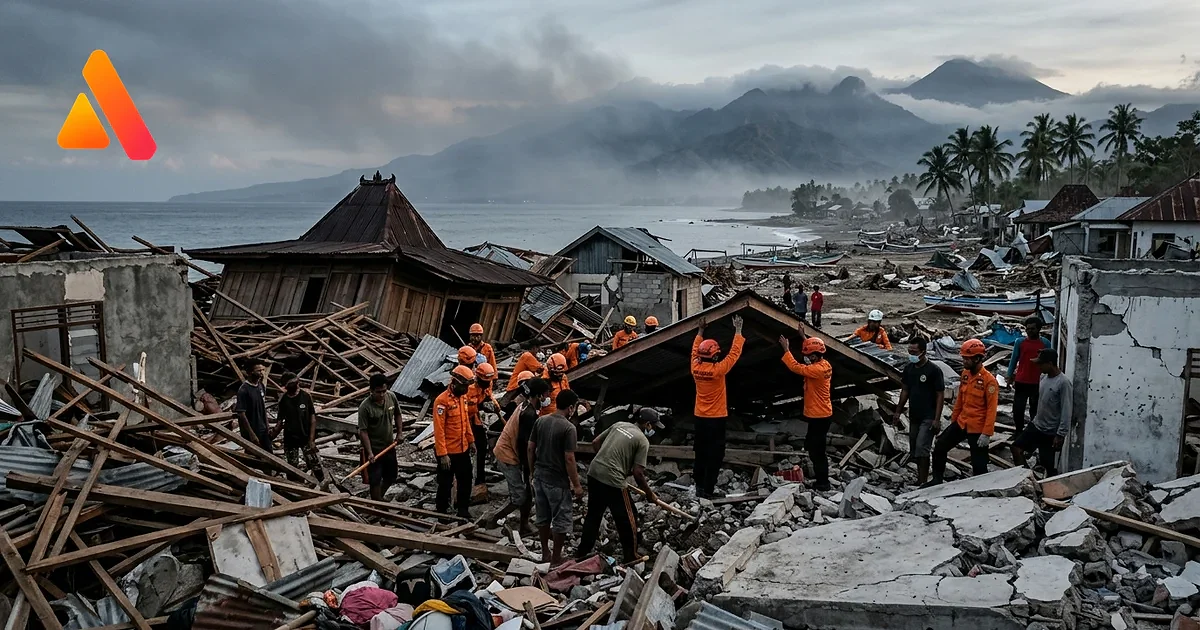
A catastrophic seismic event has shaken eastern Indonesia, leaving a trail of destruction across the East Nusa Tenggara province. On Saturday morning, August 15, at approximately 5:58 AM local time, a powerful magnitude-7.7 earthquake struck off the coast of Flores, triggering widespread panic and causing significant loss of life. The epicenter was located approximately 68 kilometers (42 miles) north-northwest of the city of Ende, according to data from the United States Geological Survey (USGS).
The sheer force of the quake has plunged the region into a humanitarian crisis. The timing of the event—occurring while many residents were still asleep—exacerbated the casualty rate, as individuals were trapped inside their homes before they could evacuate. Authorities are currently struggling to keep pace with the rising casualty figures and the immense scale of the displacement, as the disaster has affected multiple islands and remote coastal communities.
Initial reports from the National Disaster Mitigation Agency (BNPB) and other local authorities indicated a death toll starting at 25, which quickly climbed as rescue teams reached remote villages. While some early reports cited 38 or 47 fatalities, the most recent verified data suggests that at least 51 people have perished. The discrepancy in numbers highlights the extreme difficulty rescue teams face in accessing the most heavily impacted zones, where many individuals are feared trapped beneath the rubble of collapsed homes and public buildings.
Human Toll and Medical Crisis in East Nusa Tenggara
The impact on the East Nusa Tenggara province has been profound and multifaceted. Beyond the tragic loss of life, the earthquake has left hundreds of residents injured, placing an immense strain on a local healthcare infrastructure that was already limited in scope. Many of the clinics and hospitals in the affected areas were themselves damaged by the tremors, with cracked walls and collapsed ceilings complicating the delivery of urgent medical care.
Deputy Health Minister Benjamin Paulus Octavianus provided a detailed breakdown of the casualties, noting that the injuries range from critical to minor. According to official reports, 36 individuals suffered serious, life-threatening injuries requiring immediate surgical intervention or intensive care. Additionally, at least 77 people sustained minor injuries, including lacerations and fractures caused by falling debris and shattering glass.
To combat the collapse of local medical facilities, medical teams from neighboring provinces and national emergency services have been deployed. These teams are working to establish field hospitals to treat the wounded and provide psychological support to survivors suffering from acute trauma and post-traumatic stress disorder (PTSD). The psychological toll is particularly high among children and the elderly, who witnessed the sudden destruction of their communities.
Infrastructure Collapse and the Challenge of Recovery
The magnitude-7.7 quake was not merely a tremor but a violent geological shift that decimated local infrastructure. In many towns across Flores and the surrounding islands, traditional homes—often built with lightweight materials—and modern concrete structures alike collapsed instantly. The disaster was compounded by the region's geography; the powerful shaking triggered massive landslides in the mountainous interior, which have effectively severed primary transportation arteries.
Blocked roads have become the single greatest obstacle for recovery efforts. Heavy machinery is required to clear tons of rock and earth from the highways, but the instability of the terrain makes these operations hazardous. Rescue teams in Ruteng and other key districts have reported that some villages are currently only accessible by air or foot, delaying the delivery of food, clean water, and medical supplies to those most in need.
In response to the catastrophic damage and the ongoing threat of further collapses, authorities have ordered the evacuation of approximately 5,000 people. These displaced residents are currently housed in temporary shelters, tents, and community centers. However, the scale of the displacement has created a secondary crisis. There are urgent, unmet needs for sanitation, bedding, and nutrition for the thousands of people now living in makeshift camps, raising concerns about the potential outbreak of waterborne diseases if clean water access is not restored quickly.
The Danger of Aftershocks and Geological Instability
The primary earthquake was only the beginning of the ordeal for the people of eastern Indonesia. In the hours and days following the main event, dozens of powerful aftershocks have continued to rock the region. These subsequent tremors, while smaller in magnitude than the initial 7.7 quake, have been enough to trigger further landslides and cause already weakened buildings to collapse entirely, sometimes trapping rescuers who were attempting to clear debris.
Seismologists warn that the region remains highly unstable. The combination of the primary quake and the relentless aftershocks has altered the landscape, making slopes more prone to failure and increasing the risk of flash floods if heavy rains occur. This geological instability is the primary reason why thousands of residents remain unable to return to their homes, as engineers must first conduct safety assessments to determine which structures are still habitable and which must be demolished for safety.
Furthermore, the initial quake triggered tsunami warnings across the region. While these warnings were eventually lifted, the fear of a secondary surge remains prevalent among coastal populations, leading many to move further inland, adding to the congestion of temporary shelters.
International and National Response Efforts
The Indonesian government has mobilized a full-scale emergency response, coordinating between the military, the BNPB, and various non-governmental organizations. Search and rescue (SAR) teams are working around the clock, utilizing K9 units and acoustic sensors to locate survivors trapped beneath the debris. In the town of Ruteng, rescuers have continued to recover bodies from the rubble, a grim reminder of the quake's intensity.
The international community has also begun to offer assistance, recognizing the magnitude of the disaster. Global aid organizations are providing specialized equipment for urban search and rescue (USAR) and funding for the reconstruction of critical infrastructure. The focus of the current operation is divided into three critical phases:
- Immediate Response: The search and rescue of survivors and the provision of emergency medical triage.
- Stabilization: The provision of basic necessities—food, clean water, and sanitation—to the displaced population in temporary camps.
- Long-term Reconstruction: The planning and building of resilient infrastructure to mitigate future disasters.
As the region begins the slow process of recovery, the focus remains on ensuring that future constructions are more resilient to the seismic activity inherent to the "Ring of Fire" region. Experts are calling for stricter building codes and increased public education on earthquake preparedness to prevent such a high loss of life in future events.
Relevant solution
Website Development
Custom website development — fast, modern, ready to sell.
Related Articles

MikroTrick: Celah SSH MikroTik RouterOS & Cara Mengatasinya
Waspada MikroTrick! Celah kritis SSH pada MikroTik RouterOS memungkinkan hacker mengambil alih akses admin tanpa password. Simak cara mitigasi dan langkah pembersihan total di sini.

Arab Saudi vs Kuwait: Hasil Pembukaan Piala Teluk 27
Arab Saudi awali Piala Teluk 27 dengan kemenangan 1-0 atas Kuwait di Jeddah. Gol bunuh diri Y. Al Haqan menjadi penentu kemenangan dramatis tuan rumah di Stadion Al-Inma.

Avengers Endgame Encore Tayang Lagi di Bioskop Indonesia 2026
Avengers Endgame: Encore kembali mengguncang bioskop Indonesia mulai 23 September 2026. Nikmati pengalaman visual megah melalui format Infinity Vision di Cinema XXI, CGV, dan Cinepolis!

Robbie Ray's 2026 Season: Impact and Transition to Padres
Explore Robbie Ray's transformative 2026 season, from his trade to the San Diego Padres to his resilience returning from Tommy John surgery with a 13-8 record.
Dapatkan Artikel Terbaru!
Berlangganan newsletter kami untuk mendapatkan tips dan insight menarik langsung ke inbox Anda.
Kami tidak akan pernah membagikan email Anda (No Spam).