
North Korea Guide: Geography, History, and Governance

Key Takeaways
- North Korea is a totalitarian hereditary dictatorship located in East Asia, bordered by China, Russia, and South Korea.
- The nation's division occurred after World War II in 1945, leading to the establishment of two separate governments in 1948.
- The state is characterized by a comprehensive cult of personality around the Kim family and strict government controls.
- Recent reports indicate increased surveillance and food insecurity within the country as of 2025.
Geography and Strategic Location
North Korea, officially known as the Democratic People's Republic of Korea (DPRK), is a nation situated in East Asia, occupying the northern portion of the Korean peninsula. Its geography is characterized by a rugged, mountainous terrain that covers the majority of its landmass, which has historically influenced both its defensive military strategies and its agricultural challenges.
The country's geopolitical position is of immense strategic importance. It shares borders with three distinct neighbors: China to the north, Russia to the northeast, and the Republic of Korea (South Korea) to the south. The border with South Korea is defined by the Military Demarcation Line (MDL) within the Demilitarized Zone (DMZ), one of the most heavily fortified borders in the world.
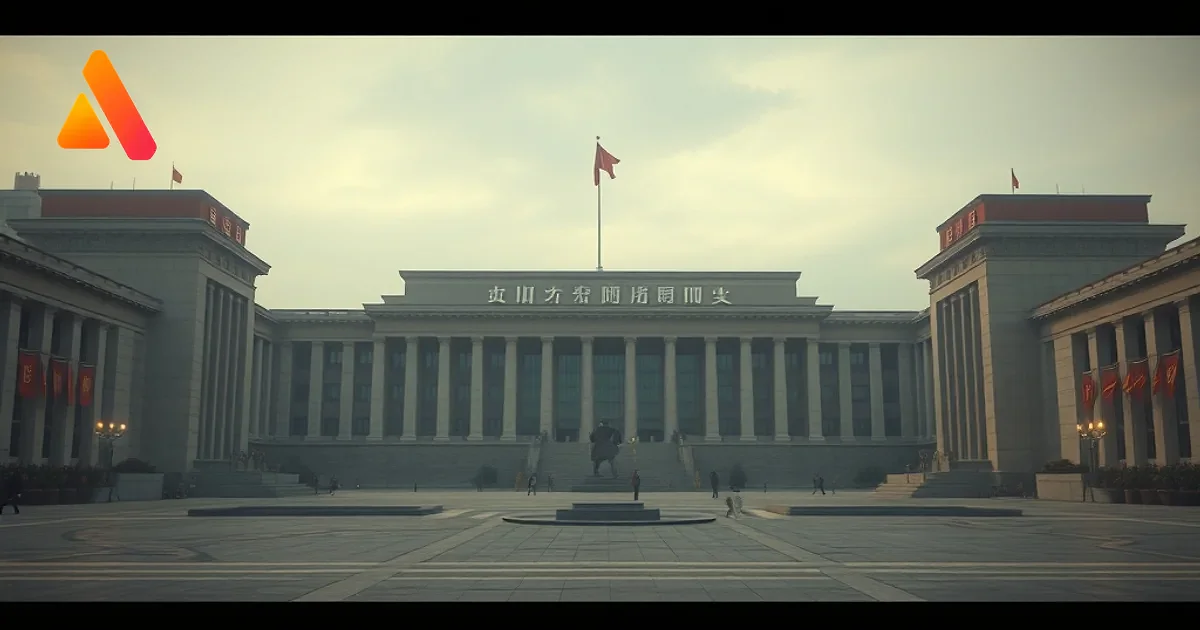
The national capital, P'yongyang, serves as the political, cultural, and industrial heart of the nation. Located near the west coast along the Taedong River, P'yongyang is designed as a showcase city, featuring monumental architecture and wide boulevards that reflect the regime's desire to project power and stability to both its citizens and the international community.
Historical Origins and the Great Division
The modern history of North Korea is inextricably linked to the conclusion of World War II in 1945. For decades prior, the Korean peninsula had been under the colonial rule of the Empire of Japan. Following Japan's surrender, the peninsula was divided into two occupation zones at the 38th parallel north. The Soviet Union occupied the north, while the United States occupied the south.
What was intended to be a temporary administrative division became a permanent political schism. As the Cold War intensified, the United States and the Soviet Union failed to reach a mutual agreement on a unified government for the region. Consequently, two separate states emerged in 1948: the Republic of Korea in the south and the Democratic People's Republic of Korea in the north.
This division was further cemented by the Korean War (1950–1953), a brutal conflict that ended in an armistice rather than a peace treaty. This means that, technically, North and South Korea remain in a state of war, a condition that continues to drive North Korea's obsession with military strength and nuclear deterrence.
Governance and the Totalitarian Structure
North Korea is widely categorized by political scientists as a totalitarian hereditary dictatorship. Unlike many other authoritarian regimes, the DPRK is defined by a comprehensive cult of personality centered on the Kim family, which has maintained absolute control for three generations.
The foundation of this power was laid by Kim Il-Sung, the country's founding leader from 1948 until his death in 1994. He established the ideology of Juche (self-reliance), which emphasizes national independence, military strength, and the rejection of foreign influence. This ideology serves as the state's guiding principle, blending Marxist-Leninist roots with extreme nationalism.
The political structure is designed to ensure that no alternative power center can emerge. The Workers' Party of Korea (WPK) permeates every level of society, from local village committees to the highest levels of government. The state employs a rigorous system of social classification (Songbun), which categorizes citizens based on their perceived loyalty to the regime, affecting their access to education, employment, and housing.
The Evolution of the Legal Framework
The legal framework of the DPRK has been iteratively revised to mirror the shifting needs of the leadership. The first constitution was promulgated in 1948, establishing the basic state apparatus. However, as the cult of personality grew, the constitution was replaced by a new version in 1972, which formally institutionalized the presidency and the absolute power of Kim Il-Sung.
Subsequent revisions occurred in 1992, 1998, 2009, and 2016. The 1998 amendments were particularly significant; following the death of Kim Il-Sung, the document was altered so extensively that it fundamentally redefined the state's structure, effectively creating a "eternal" presidency for the deceased founder while consolidating power for his successor, Kim Jong-il.
Current Social and Internal Conditions
The North Korean regime has demonstrated a remarkable, if brutal, capacity to maintain its core strategic priorities over several decades. Despite facing severe international sanctions and economic isolation, the leadership continues to prioritize the development of its nuclear weapons program and ballistic missile capabilities.
However, the internal situation remains volatile and precarious. In recent years, and specifically leading into 2025, reports indicate that the government has significantly increased its information controls. This includes stricter surveillance of digital communications and a crackdown on the consumption of foreign media (such as K-dramas or Western films), which the regime views as a threat to its ideological purity.
Furthermore, the state has intensified restrictions on "jangmadang" (informal markets). These markets emerged during the Great Famine of the 1990s as a survival mechanism for the population, but they also created a new class of entrepreneurs and introduced capitalist elements into the economy. By restricting these markets, the regime seeks to regain total control over the distribution of resources.
Humanitarian Challenges and Inequality
Beneath the facade of military parades and monumental architecture lies a reality of deepening inequality and food insecurity. While the elite in P'yongyang enjoy relative luxury and access to imported goods, the rural population often struggles with chronic malnutrition and a lack of basic healthcare.
The secretive nature of the country makes it difficult to gather precise data, but testimonies from defectors highlight a system of political prison camps (kwanliso) where perceived enemies of the state are subjected to forced labor and torture. Under the current leadership of Kim Jong-un, the regime has continued to use these measures to ensure absolute obedience.
International Relations and Global Impact
North Korea's relationship with the world is characterized by a cycle of provocation and negotiation. The regime often creates international crises—through missile tests or nuclear threats—to force the international community, particularly the United States, to the negotiating table to secure sanctions relief or diplomatic recognition.
While China remains North Korea's most vital economic lifeline and diplomatic shield, the relationship is often strained by North Korea's unpredictable behavior. Nevertheless, the geopolitical necessity of preventing a collapse of the North Korean state—which could lead to a refugee crisis or a unified Korea under a US-allied government—ensures that China continues to provide essential support.
Relevant solution
Website Development
Custom website development — fast, modern, ready to sell.
Related Articles

Jim Acosta: From CNN Chief Correspondent to Independent Journalist
Explore the evolution of Jim Acosta from CNN's Chief White House Correspondent to a fearless independent journalist. Discover his battles for press freedom and his mission to fix 'broken' news.

Meta VR Glasses: Specs, Price, and Release Date Revealed
Meta has unveiled the Meta VR Glasses at Connect 2026, featuring a revolutionary 100-gram design and micro-OLED displays. Launching in Spring 2027 for $1,299, these glasses aim to replace bulky headsets with a portable, workstation-ready wearable.

Robbie Ray's 2026 Season: Impact and Transition to Padres
Explore Robbie Ray's transformative 2026 season, from his trade to the San Diego Padres to his resilience returning from Tommy John surgery with a 13-8 record.

arXiv Jadi Organisasi Nirlaba Independen: Dana $17,2 Juta
arXiv bertransformasi menjadi organisasi nirlaba independen berkat pendanaan filantropi sebesar $17,2 juta. Simak bagaimana langkah ini memperkuat akses terbuka riset global.
Dapatkan Artikel Terbaru!
Berlangganan newsletter kami untuk mendapatkan tips dan insight menarik langsung ke inbox Anda.
Kami tidak akan pernah membagikan email Anda (No Spam).