
What is the NX Bit? Hardware Security and Memory Protection

Key Takeaways
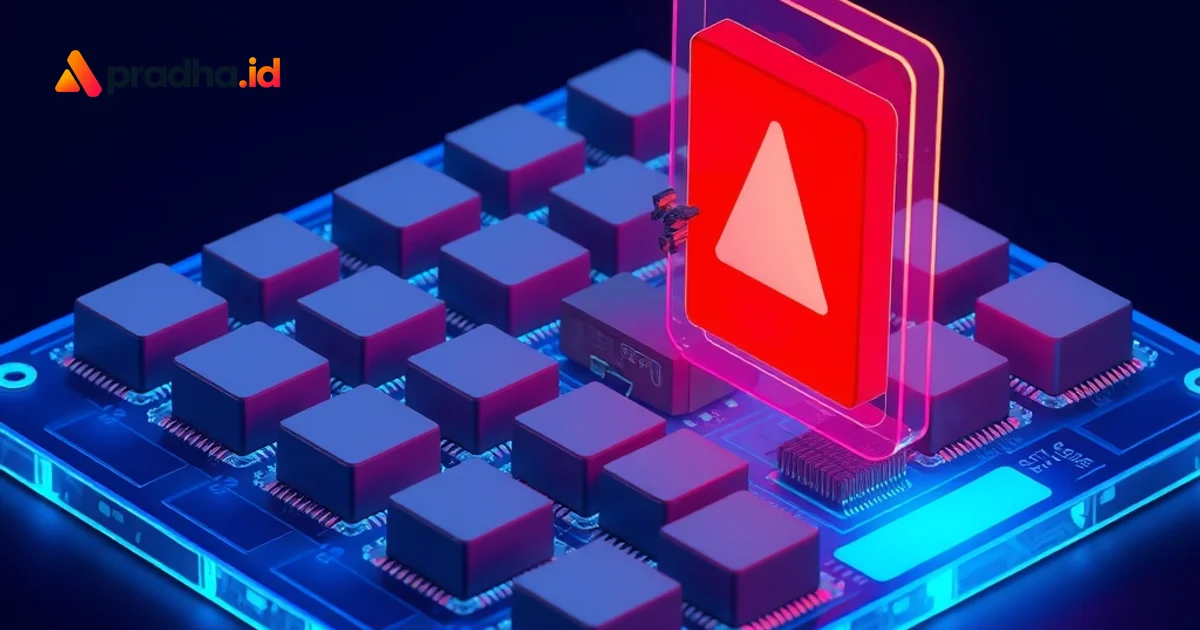
- The No-Execute (NX) bit is a hardware-based security feature that prevents memory pages from being used as executable code.
- While primarily known as a security mitigation, the NX bit can cause mysterious bugs in low-level programming, such as bare-metal hypervisor development.
- Known as Execute Disable (XD) in Intel terminology, it is implemented via specific bits in page table entries.
Understanding the NX Bit: Beyond Hardware Security
In the landscape of modern cybersecurity, the battle between attackers and defenders often takes place at the most fundamental level of computer architecture: the memory. One of the most pivotal defenses in this arena is the No-Execute (NX) bit. At its core, the NX bit is a hardware-based security feature designed to mitigate the effects of various memory-corruption exploits, such as buffer overflows, by strictly enforcing the separation between data and executable code.
What Exactly is the NX Bit?
The No-Execute (NX) bit is a mechanism that allows the processor to mark specific pages of memory as non-executable. In the world of Intel processors, this same functionality is branded as Execute Disable (XD). The primary objective is to ensure that memory regions intended for data—such as the stack or the heap—cannot be misused to run malicious instructions. This functions similarly to how a write bit determines whether a memory page can be modified; the NX bit determines whether the CPU is permitted to fetch instructions from that page.
Microsoft DevBlogs notes that the NX bit specifically prevents a page from being used as executable code. Without this protection, an attacker could perform a "stack smashing" attack, where they overflow a buffer to write malicious machine code into the stack and then redirect the program's execution flow to that specific memory address. With the NX bit enabled, the CPU will trigger a hardware exception the moment it attempts to execute code from a page marked as non-executable, effectively crashing the application rather than allowing the exploit to succeed.
Technical Implementation and Memory Management
From a technical implementation standpoint, the NX bit is not a software flag but a physical bit located within each page table entry (PTE) of the Memory Management Unit (MMU). When the operating system's kernel maps memory, it configures these bits to define the permissions of each page. COMP60261 Part 1: Systems Software Security explains that this bit allows the system to control the executable or non-executable status of specific memory regions with granular precision.
To maximize security, modern operating systems typically employ a strategy where memory is never simultaneously writable and executable (W^X). Microsoft DevBlogs highlights that the NX bit is usually used in tandem with unsetting or resetting the write bit. This ensures that pages containing executable code cannot be dynamically modified by an attacker, and pages that are writable (for data storage) cannot be executed.
Beyond Security: Real-World Debugging Challenges
While the NX bit is widely recognized as a security tool, it can introduce significant complexities during low-level software development, particularly when working with bare-metal environments or hypervisors. When hardware protections are enforced strictly, a minor configuration error in the page tables can lead to system crashes that are incredibly difficult to diagnose.
A compelling case shared by purplesyringa illustrates this struggle. A developer named Sonya was debugging a bare-metal hypervisor on ARM64 for postmarketOS and encountered a mysterious bug that defied standard troubleshooting. The process involved ruling out a wide array of low-level culprits, including CPU errata, kernel panics, register corruption, and icache/dcache coherency issues. As reported by daily.dev, the eventual fix revealed that the issue was caused by marking memory as non-executable. This demonstrates that the implications of the NX bit extend far beyond security; they directly impact system stability and can create "ghost" bugs that haunt developers working at the hardware-software interface.
Furthermore, the interaction between hardware breakpoints and the NX bit adds another layer of complexity. RedOps notes that hardware breakpoints often trigger before the CPU performs the actual instruction fetch. This means breakpoints can fire before the MMU even checks the NX bit on the page table, potentially creating discrepancies between how a debugger sees the code and how the CPU executes it.
Distinguishing NX from Other Technical Issues
To maintain a high level of security literacy, it is critical to distinguish hardware-level protections like the NX bit from software-level vulnerabilities or supply chain attacks. These are often conflated because they both fall under the umbrella of "security," but their origins and remediations are entirely different.
For example, StepSecurity reported a separate security incident involving the Nx Console VS Code extension. In this instance, version 18.95.0 of the extension—which boasts over 2.2 million installs—was published with malicious code designed to target cloud and developer credentials. This was a supply chain compromise involving a stolen RSA key, not a failure of hardware memory protection. The "Nx" in the extension's name is a coincidence of branding and has no relation to the No-Execute hardware bit.
The Broader Context: Data vs. Instruction Separation
The fundamental philosophy behind the NX bit—the strict separation of instructions and data—is a recurring theme in computer science, now extending into the realm of Artificial Intelligence. SnailSploit explores this by drawing an analogy between prompt injection in Large Language Models (LLMs) and traditional SQL injection. In SQL injection, the attacker tricks the system into treating data (the input) as a command (the SQL query). While the NX bit solves this for machine code at the hardware level, SnailSploit notes that the analogy for LLMs is "comfortable-but-wrong." Unlike SQL injection, which has a definitive technical fix (parameterized queries), the separation of instructions and data in LLMs presents a much more fluid and challenging problem because the "code" and the "data" are both expressed in natural language.
The Role of NX in Modern Computing Ecosystems
The influence of the NX bit is visible across various modern computing paradigms. In the realm of confidential computing, Cisco's white paper describes X-Space (sometimes called the NX bit) as a foundational element of executable space protection, ensuring that protected environments remain secure from unauthorized code execution. Similarly, Flutter documentation mentions that when a shared object does not have the NX bit set, it can be flagged as a security false positive because the lack of the NX bit leaves the system vulnerable to the exploitation of memory corruption vulnerabilities.
Even in the emerging field of agentic computing, the NX bit remains a cornerstone. Systems Security Foundations for Agentic Computing identifies the no-execute bit as a basic invariant of the Trusted Computing Base (TCB), serving as a primary hardware guardrail that ensures data put into memory cannot be misinterpreted as a command, thereby providing a root of trust for higher-level language understanding and agent autonomy.
Sumber / Sources
- The NX bit is not just about security · Hacker News - Zeli
- No-exec / NX - HackTricks
- Runtime Defences - COMP60261 Part 1: Systems Software Security
- Nx Console VS Code Extension Compromised - StepSecurity
- What was the secret sauce that allows for a faster restart of Windows ...
- The NX bit is not just about security | daily.dev
Relevant solution
Website Development
Custom website development — fast, modern, ready to sell.
Related Articles

5 Teknologi Terbaru 2025 yang Wajib Dikuasai Developer
Temukan 5 teknologi terbaru 2025 yang wajib dikuasai developer. Dari kecerdasan buatan hingga keamanan cyber, pelajari apa yang diperlukan untuk unggul di...
Otomasi KYC: Verifikasi KTP & NPWP Perusahaan dengan AI
Tingkatkan efisiensi onboarding vendor dan klien dengan otomasi KYC berbasis AI. Pelajari cara ekstraksi data KTP & NPWP otomatis serta deteksi fraud untuk mempercepat bisnis Anda.

Integrasi AI Sales Assistant & Payment Gateway untuk Checkout
Tingkatkan konversi chat commerce dengan integrasi AI Sales Assistant dan Payment Gateway. Pelajari arsitektur checkout otomatis yang aman, bebas double-charge, dan siap skala produksi.

MikroTrick: Celah SSH MikroTik RouterOS & Cara Mengatasinya
Waspada MikroTrick! Celah kritis SSH pada MikroTik RouterOS memungkinkan hacker mengambil alih akses admin tanpa password. Simak cara mitigasi dan langkah pembersihan total di sini.
Dapatkan Artikel Terbaru!
Berlangganan newsletter kami untuk mendapatkan tips dan insight menarik langsung ke inbox Anda.
Kami tidak akan pernah membagikan email Anda (No Spam).